


-


-

-
Search
-
Recent Posts
- Kryptowährungen Handeln Test – Wo sind kryptowährungen verboten?
- Sichere Krypto Börse – Kryptowährung wovon abhängig?
- Kryptologie Uni Ulm | Welche kryptowährungen haben potenzial?
- Scalping Kryptowährung – Wie viele kryptowährungen gibt es bei coinbase?
- Margin Trading Kryptowährungen Yahoo Finance – Warum steigen kryptowährungen so stark?
Blog Archive
March 2026 M T W T F S S « Aug 1 2 3 4 5 6 7 8 9 10 11 12 13 14 15 16 17 18 19 20 21 22 23 24 25 26 27 28 29 30 31 Categories
- Activities With Kids
- Adolescence
- Adulthood
- Aging
- Anger Management
- Apps
- Arts Education
- Babies
- Blog
- Books
- Boys to Men
- Breastfeeding
- Camp
- Cars
- Celebrity Dads
- Charity
- Child Development
- Children's Music Reviews
- Columns by Family Man
- Contests
- Creativity
- Dating Dad
- Death
- Divorced Dads
- Education
- Ethics
- Family Communication
- Family Man in the News
- Family Man Recommends
- Family Music
- Family Music Reviews
- Father's Day
- Featured Moms & Dads
- Film
- Food
- Free Stuff
- Friendship
- Gender
- Graduation
- Grandparents
- Halloween
- Health
- Helping Kids Understand Loss
- Holidays
- Humor
- Internet Safety
- LifeofDad.com
- Love and Courtship
- Marriage
- Morals
- Mother's Day
- Movies
- Music
- Newborns
- Over-parenting
- Parenting Stress
- Perspective
- Pets
- Politics
- Protecting Children
- Safety
- School
- Sex Ed
- Siblings
- Single Fathers
- Social Action
- Special Needs
- Sports
- Sweepstakes & Promotions
- Talking About Disasters
- Teens
- Top Ten Lists
- Travel
- Traveling With Kids
- TV
- Tweens
- Uncategorized
- Values
- Vasectomy
- Video
- What Dads Need to Know
- Work-Family Balance
Recent Comments
- Beth on The One That Ends With Hope
- Judi Feldman on The Brass Tacks of Music Education
- Fran Keer on A Road Well Traveled
- norman edelson on A Road Well Traveled
- Justin Rogan on The Gift of Boredom
- © 2026 - Gregory Keer. All rights reserved.
Author Archives: Family Man
Free to Laugh with “It’s OK To Do Stuff”
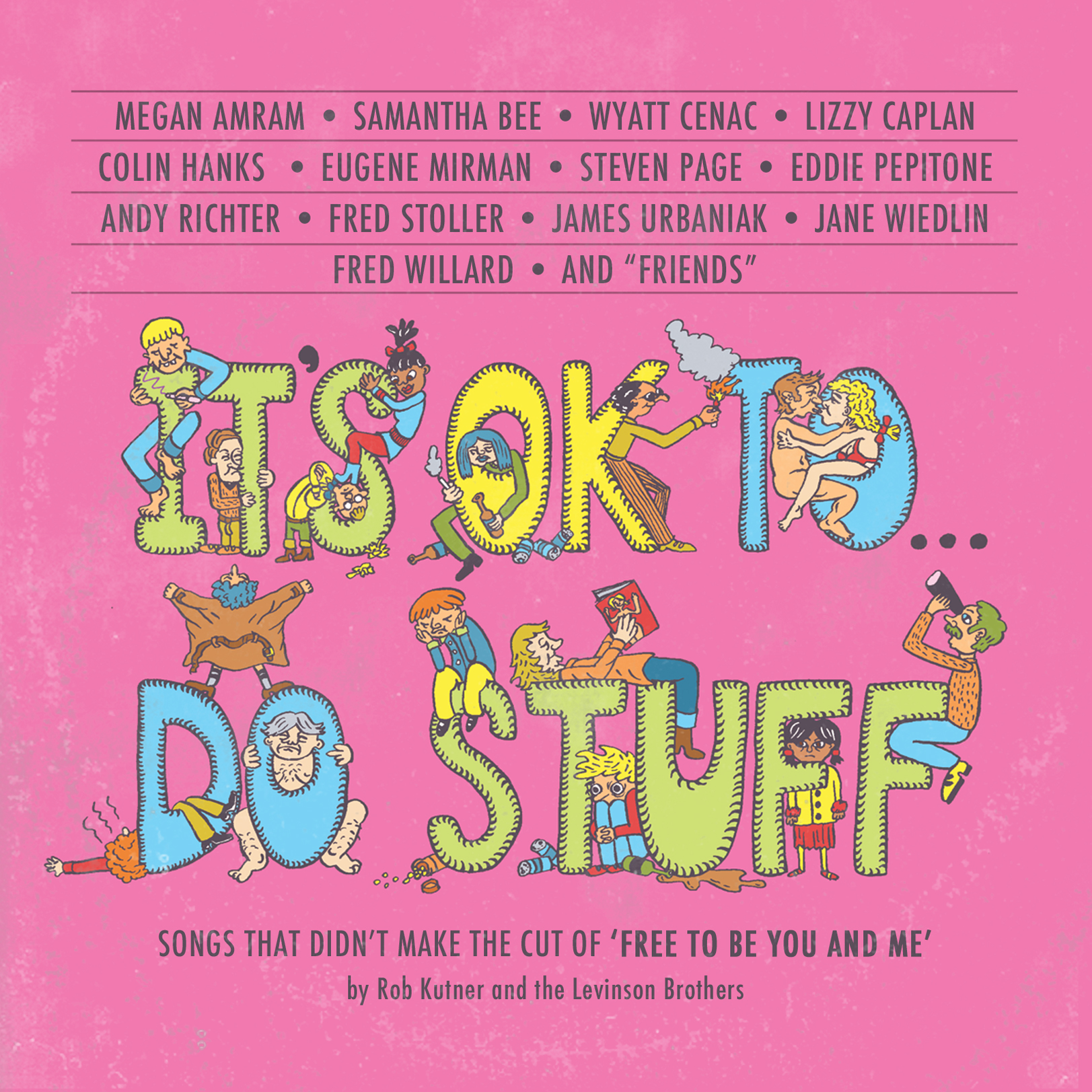 With its songs and stories of individual expression and diversity, Free to Be…You and Me made a strong impact on my childhood in the ’70s. Marlo Thomas’s star-studded music and video production (which included the talents of Mel Brooks, Diana Ross, and Alan Alda, to name a few) continues to speak to kids, today. Its impact goes beyond making all kids feel included in a sometimes fractured world — it has inspired a bunch of talented contemporary comic writers to produce It’s OK to…Do Stuff. As a huge Free to Be… fan I am equally offended and entertained by this parody. This is what happens when we grow up in the “land that I see where the children run free” and end up fans of things like Avenue Q. Produced by Rob Kutner and the Levinson Brothers, and aimed at parents — and their snarky adolescent kids — it features Steven Page (formerly of the Barenaked Ladies) on “Be Yourself…Unless” and Kimmy Gatewood and Colin Hanks (“Divorce Makes a Family Twice as Big”), among other notable contributors.
The Power of Stories: Flying Books and Ticking Clocks
By Gregory Keer
I’m sitting on the couch at 7:30pm, unable to do anything but stare at the TV changer, which is two feet in front of me, yet seemingly miles away.
“Must reach remote,” I say to myself. “Workday done. Dishes washed. Kids occupied. Basketball game starting…”
I muster the energy to lean forward when my mop-topped eight year old explodes through the living-room door.
“Daddy, let’s read!” Ari demands.
“Aren’t you old enough to read on your own?” I implore.
“No, I want to read with you,” he says, jutting out his lower lip to make a face he thinks tugs at my heartstrings.
It does.
Glacially, I rise from the couch, as if every muscle has been in hibernation for a season.
“Hurry, Dad, it’s getting late!” he shouts as he dashes ahead of me. Where does he get his reserve energy?
I make it to Ari’s room, moving like I’m underwater. I climb onto his bunk bed, clumsily arranging my adult body between stuffed animals and errant toys to get comfortable.
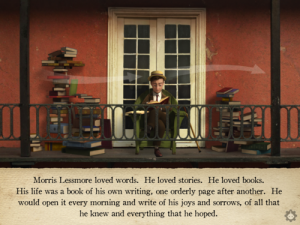 Then, we read William Joyce’s The Fantastic Flying Books of Mr. Morris Lessmore, about a writer whose library flies away in a hurricane. He is transported, Wizard of Oz-like to a world where he meets living books he comes to care for and that care for him as he grows old.
As grumpy as I was about having my me-time suspended, I generate some presence of mind to melt into the moment. It’s nice that my second grader, who loves devouring chapter books on his own, still wants his reading time with me.
When we finish, Ari asks, “Cuddle?”
Barely able to keep my eyes open, I agree, turn off the light, and proceed to fall asleep.
When I wake up, I’m as disoriented as a wayfarer who regains consciousness in a strange forest and curse myself for having lost 45 minutes of the evening.
I stumble from the bed, apologize to my wife — who’s working at the computer — for disappearing for so long. I check on my other sons, who are busy with homework and texting and my stomach churns over the fact that my plan to chat with them evaporated with my unexpected nap.
Bleary eyed, I break out the laptop to power through emails I just couldn’t finish during the day and don’t look up until I realize everyone in the house is asleep but me.
Lying down, I kiss my wife’s forehead, still bearing the frown of a complicated week and — can’t fall asleep. Knocked out of whack by the nap, I’m left with thoughts racing through my mind about everything I didn’t do and will likely be unable to do with so few hours in the day and so little energy in my aging body.
And then, I think about Morris Lessmore. Like Morris, I am often caught up in a hurricane of life. It carries away my days and, along with it, my ability to take stock in my children’s ascension to maturity. All too often, I find myself rushing my kids out in the morning and into bed at night just so I can get to – what? The end of the day, which will just bleed into another day of careening through responsibilities?
It’s a battle to leap from the cyclone, but it does happen for me, particularly when it comes to appreciating stories. It occurs in the moments I push myself past exhaustion to read a picture book with my youngest, watch and discuss a classic film with my oldest, and take in (with tears of pride) the short stories my middle child writes.
While not everyone is a writer, we all have the power to read books, watch movies and TV programs, and even to tell stories to our children, on everything from their days as infants to our own adventures through the years. Stories allow us to press the pause button on life and reveal our observations about what has happened and might come to be. While the whirlwind continues to whoosh around us, stories transport us to a quieter place of being together and acknowledging the tiny details that otherwise go unnoticed.
With the four days that Thanksgiving allows me with my family, I plan to do more cuddling with the kids — from the teenager to the second grader — to read, watch, and tell stories. Sweeter than any dessert, those moments will complete a holiday intended to help us all slow down and relish the most precious yet fleeting thing of all — time with those we love.
Tom Riles Asks Kids – What Are You Thankful For?
Tom Riles, dad, comic, filmmaker, and founder of LifeOfDad.com, asks kindergartners: what are you thankful for?. This Thanksgiving, try turning the video camera (or iPhone) on your kids and ask them they’re thoughts. Hopefully the words, “I am thankful for my amazing, selfless parents” will come up.
What Dads Need to Know: Be the Person You Want Your Child to Be
By Betsy Brown Braun
“You will not believe this story,” began the email from a client who had just returned from family services for the Jewish New Year. She described the mother and three children sitting next to her own family. “She was knitting!” (Yes, you read it correctly, knitting.) “And when she was done knitting, she pulled out her Blackberry and began texting.” I queried as to her guess of the ages of the children. Elementary and middle school, was her reply.
There really isn’t more I need to write here. You who are taking the time to read this blog know exactly how I feel and what I am going to say.
 When I was writing the Introduction to my book, You’re Not the Boss of Me, I seriously considered having only a single sentence on the page: Be the person you want your child to be. We all want our children to be honest, respectful, self reliant, and manifest all the myriad character traits that put them in the position to have options and lead a satisfying life. Can’t you hear the woman from temple lecturing her children about paying attention and showing respect and all the rest!
Being a parent is a job; it isn’t a birthright. It comes loaded with responsibilities (and yields tremendous pleasure.) You might as well have signed the contract right after the doctor handed you that tiny newborn. I accept the responsibilities that come with being a parent.
After Love your child, number two on that list is Be your child’s teacher. Seems obvious I know. But there are those who just don’t get it. There is the mom who insists on respectful talk and yells at the parking attendant… in front of her child. There is the perfectly healthy dad who preaches honesty and tells his colleague that he can’t make the appointment because he isn’t feeling well…in front of his child. You know the mom who demands that her child not use the word “stupid,” the one who screams out Stupid driver! to the car in front of her. And we all know the dad who insists on his child’s full attention who himself can’t resist looking at his BlackBerry at dinner, during story time, or when he’s just walked into the house.
Children are the first to spot character and value hypocrisy. In fact, they learn by noticing consistency in the world. Oh Daddy, you said the S word! They look to you, their first teacher, for validation of what you have taught. Every day in so many ways you have the chance to model your expectations for your children and bring the lesson home.
Remember this, your children will do what you do, not what you say.
Betsy Brown Braun, is the bestselling author of the award winning Just Tell Me What to Say (HarperCollins 2008), and You’re Not the Boss of Me (HarperCollins, 2010), also a best seller. A child development and behavior specialist, popular parent educator, and mother of adult triplets, and grandmother, she is a frequent speaker at educational and business conferences, has been a guest expert on Today, the Early Show, Good Morning America, Dr. Phil, Entertainment Tonight, Rachel Ray, Fox and Friends, and NPR, and has been cited in USA Today, the New York Times, Family Circle, Parents, Parenting, Woman’s Day, Real Simple, and Good Housekeeping among countless other publications and websites. As the founder of Parenting Pathways, Inc., Betsy offers private consulting and parenting seminars as well. She and her husband live in Pacific Palisades, California.
Family Man Recommends: Children’s Music Reviews for November 2012
Reviewed by Gregory Keer
With a couple of extra days off this Thanksgiving break, take some extra time to listen to music with your kids. Try some classical music such as Mozart, Debussy, or Beethoven. Then sample the work mentioned in these children’s music reviews, which have a decidedly orchestral concentration.
Justin Roberts isn’t content with having risen to the heights of kindie rock stardom with hook-laden pop tunes. Now, he rises into the clouds of transcendent lullaby music full of poetic images and lush orchestration. Lullaby is an event-caliber album, featuring singers from the Chicago production of the musical Hairspray and members of the Chicago Symphony Orchestra (Roberts does indeed call Chicago home). On this lush recording, some of the more sparkling tracks are the gracefully imaginative “Count Them As They Go” the string-happy “Heart of Gold,” the Van Morrison-influenced “A Wild One,” and the timelessly gorgeous title song.
 Wacky wordplay pairs with a wide-range of musical styles, including (you guessed it, orchestral) on Zak Morgan’s The Barber of the Beasts. Sporting elements of Shel Silverstein’s Where the Sidewalk Ends-style poetry, this album is a total blast to listen to and demands more than just casual sampling. At least once, sit down with your child(ren) and enjoy everything from the classically-inspired “Overture” and the title track to the growling rock of “Snow Day.” The CD booklet has vocabular guides for all the verbal fun going on in the lyrics.
The always adventurous world-traveling Putumayo Kids label delivers a new collection, World Sing-Along. Laden with inviting tunes such as Jorge Anaya’s dance-worth “La Cucaracha,” Father Goose’s island take on “Jig Jog Jee,” Frances England’s cozy interpretation of “That’s What Friends Are For,” and Dan Zanes and Anjelique Kidjo’s refreshing version of the Harry Belafonte classic “Jamaica Farewell.” A portion of the sales will be donated to a child-health cause, so the album will do double duty in this time of thanks-giving.
Post Disaster Tips for SheKnows.com
In the midst of these very difficult times for people on the East Coast, Tom Riles, the founder of LifeOfDad.com, has written and promoted content to help support those enduring the disaster and the rest of us who need to understand what our fellow parents are going through. He also connected me with the editors at SheKnows.com, who asked for post disaster tips that answer the kinds of questions children are asking after the superstorm.
Talking to Your Children About Disasters
By Gregory Keer
If there’s a place in the world that is never affected by natural disasters, and the terror that these uncontrollable occurrences bring, tell me where and I’ll move there. In the meantime, my eyes and ears are taking in the reports of what the storms are doing to the East Coast and beyond. Like so many of us, I have family and friends who are without power, stranded in homes and airports, and just plain freaked out. Of particular concern is the children, who feel the least in charge at a time when nature is running amok and adults are not always at their most communicative.
Here are some thoughts on talking to your children about disasters to ease their minds, be they currently remote from harm’s way or just worried about what’s happening in the east.

1. Assure Them of Their Safety.
No parent can guarantee that they can keep their children safe from harm — but the children don’t need to know that. What they do need to know is that you will do everything in your power to keep them safe. Especially for young kid, this blanket statement will calm them, giving them a tangible answer to their chief question of whether anything will hurt them.
2. Stay Calm and Be Comforting.
Always remain calm as you explain things to them, so they do not sense any fear you might have. Couple your words with plenty of hugs and comforting touch so they sense the security blanket you really are.
3. Encourage Questions.
By all means, invite them to ask any questions they may have so they can work out their thoughts with you. If you can’t answer something, go and find an answer from an information resource, a friend, or doctor, if need be. You are your child’s protector and source of information, which is usually a lot better than the mass media, which often sensationalizes things. If you do let them watch a news report, do it in small doses and do it together so you can answer those inevitable questions.
4. Explain How Nature Works.
Nature is as beautiful as it is terrible. You don’t want your child to worry that the natural world is out to get them. So, while you can explain how hurricanes and earthquakes work, also tell them how most human beings survive and build themselves back up. In addition, discuss with them how nature creates land and life in dramatic fashion and sustains us in the quietest ways.
5. Help Them Help Others.
Children may feel powerless, not only in the face of nature, but because they are so far away from those affected. Choose a charity, be it Save the Children, the Red Cross, or Doctors Without Borders, or some other organization, and have them give some of their allowance to send to those in need in the affected areas. You might even use this opportunity to teach them about the parts of this country and beyond that are impacted.
By helping your children through their own fears of disaster, you will meet one of the great tests of parenthood. Bear in mind that if all you do is tell them that you will protect them with everything in your power, you will be doing very well by your children.
Pie Time – A Dad Makes Time Management Fun
 Family Man Recommends: Pie Time –https://itunes.apple.com/au/app/pie-time/id534413139?mt=8 – a new app that makes time management easier for kids to grasp and parents to enforce. Created by educator, animator, and father Roger Blonder, this has been birthed from real experience and a genuine desire to help families. Plus, it’s a lot of fun, especially for younger kids, because of the delicious cartoon graphics.
Night of the Shrinking Bed
By Gregory Keer
It was a cold, eerie night, eight years ago, an evening that still sends chills up and down my spine. My wife and I had endured a fifth straight evening of multiple wake-ups from our newborn. After two feedings, three walks around the house, and four false-alarm cries, Wendy and I trembled with exhaustion. This was compounded by the stress of having just moved to a new home, my starting a teaching gig, and our older sons kicking off a new school year.
Finally, sleep came and, when it did, I went down hard.
That was until I felt a “presence” hovering over me. Dog-tired, I kept snoring. Then I heard a faint wheezing. The wheezing turned to heavy breathing, which got louder and louder. High-pitched moaning pierced my eardrums and my eyes snapped open.
A dark shape stood next to me, holding what looked like an axe!
I screamed. “Ahhhhhh!!!!.”
My wife jumped up and shrieked, “Where’s the baby?”
The figure screamed back. “Dadddeee!!!”
Bolting upright, I recognized the shape as my son, Benjamin. The axe I imagined was his tattered blanket.
My son burst into tears and fell across me in the aftermath of what had been a twisted recreation of the movie scene in which Drew Barrymore sees E.T. for the first time. In this case, I was Drew Barrymore.
“What were you doing standing over me like that?” I said breathlessly.
“I – just – wanted – to – cuddle,” Benjamin blurted between sobs.
And there it was. The dramatic comeuppance for two parents who had long struggled with the issue of a family bed.
Before my wife and I had children, we swore we’d never let our kids sleep with us. We judged others who let their kids in the bed, thinking that kind of arrangement could only create intimacy problems for the couple and therapy sessions for the children.
Sometime later, we found ourselves changing our tune. It began when Benjamin, then almost three and new to a “big boy” bed without rails, started sneaking into our room in the middle of the night. Due to fatigue and the sheer joy of cuddling, we let him snuggle with us for a few hours each night. This went on for a couple of years until Jacob got old enough to leave the crib and want his own time in Mommy and Daddy’s bed.
So we started a campaign to keep the kids on their own mattresses. We told them that they could crawl in with us in the morning, when it was light outside. Jacob, always a deeper sleeper, was easier to keep to the new rule. But we had to experiment with all kinds of tricks to keep Benjamin in his room. Over time, we tried clocks, a sleeping bag on our bedroom floor, extra stuffed animals, a special pillow, and just plain begging with intermittent success.
Then, there was the previously mentioned night of all that wheezing and screaming.
After we all calmed down, I escorted Benjamin to his bed, reminding him of the house rules. A little later, he returned. I got crankier and he went away wailing again. This back-and-forth occurred every 10 minutes, as he tried to gain our sympathy and we used every tactic from yelling to listing all the playdates he was going to lose.
Then, my son Jacob joined the fray, shouting out like a lost child that his pull-up needed to be changed. Jacob fell back asleep but he was replaced by the dog that scratched at the door to go outside and the cat that upchucked a fur ball on the bed. All the while, my wife and I bickered about how to handle the whole mess.
I pleaded with our first-born. I even cried when he cried, asking for mercy on his exhausted father who had to wake up to teach cranky high-school sophomores in the morning.
Finally, with Benjamin as worn out as I was, I found clarity – kind of like a Bugs Bunny horror spoof in which the rabbit realizes the way to stop the monster is by complimenting him (“Gee, Doc, you got really big muscles.”) So, I appealed to Benjamin’s desire to feel like the big boy he was.
“You graduated from kindergarten and now you’re a first grader,” I explained. “It’s time to graduate to sleeping the whole night on your own. You can do this.” I then promised him a reward chart that would track how many nights he could stay in his bed.
Things got a lot better after that. For a while thereafter, Benjamin still crawled into bed with us at 6am or so, but he was proud of himself for becoming more “sleep independent.” Eventually, he stayed in his bed all night and my wife and I got our bed back…That is until kid number two started haunting us.
What Dads Need to Know: Roughhousing Benefits
By Heather Shumaker
My neighbor is a stay-at-home dad. When he heard I had written a parenting book – one that included chapter titles like “Ban Chairs – Not Tag” and “Bombs, Guns, and Bad Guys Allowed,” he perked right up. “I was always being told I was “bad” as a boy because I needed to move my body,” he said.
Movement, action and rough physical play are an essential part of early childhood, for boys and girls alike. Instead of banning high energy, find ways to welcome it.
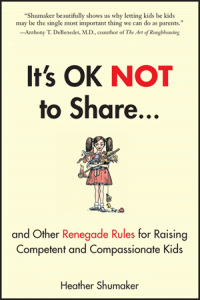 Here’s an excerpt from the book It’s OK Not to Share…And Other Renegade Rules for Raising Competent and
Compassionate Kids (Tarcher/ Penguin, 2012. Reprinted with permission). The book contains a whole section called “Running Room” which explores action, power and movement. This chapter celebrates roughhousing.
Renegade Rule 17 – Only punch your friends
Dan punches Leo, and Leo punches right back.
Nearby, an adult looks on, but doesn’t interrupt. These two four-year-olds are having fun. Dan and Leo are both wearing pint-sized boxing gloves, purple and red, and standing barefoot on a tumbling mat. They are giggling and having a marvelous time.
Renegade Reason – Roughhousing—even play boxing—is social and healthy. But it has no place if someone’s angry.
When I told a fellow mother that I was writing a book which included boxing at preschool, she was shocked. “Boxing? You’ve got to be kidding me. I spend my time trying to keep their hands OFF each other!”
That can be a problem. Young kids are physical creatures. They like body contact and have a deep need for touch. Especially since verbal skills are still developing, one of the ways children show interest in a friend is through physical contact, sometimes hugs, sometimes play fights.
Lee and Janet, the founders of my childhood preschool noticed this. They watched kids play and saw how much young kids liked to wrestle. Children would roll around together like little lions or puppies. They thought: if kids want to play that way there must be a reason. Well, why not? Lee and Janet equipped rooms with wrestling mats and boxing gloves. Rough-housing games blossomed into a 40-year tradition at the School for Young Children.
Rough-housing games, like boxing and wrestling, give kids outlets for high energy and boost friendships. But only when everyone is having fun. If someone’s angry, it’s not a game. Rough-housing is not a way to settle a conflict. Games should be between willing partners who are in a playful mood.
What’s more, it turns out that boisterous play like preschool boxing is not only a legitimate way to have fun, it also plays a positive, important role in child development.
Renegade Blessings
Rough-and-tumble play helps our kids grow on many levels. A child can learn:
– I’m strong and powerful.
– It feels good to use my body actively.
– I can make friends and take on new challenges.
– I can set limits on other people and stop something I don’t like.
– I can listen to my friends and know when to stop.
– I can cope, even if I get hurt a little bit.
– If someone gets hurt, we can make new rules so it doesn’t happen again.
Why it works
Whether it’s called rough-and-tumble play, boisterous play, horse play, puppy play, or rough-housing, this kind of play is a vital part of childhood. Rowdy puppy play helps bodies and brains develop. When two kids tussle on the floor, or roll around together, they are showing the need to wrestle. If we say ‘no’ to rough play, we are thwarting this need. Instead of issuing a ban (Get your hands off of him! Quit hitting your brother. I don’t want to see any bodies touching.) think how you can best meet this age-old need.
Horse play may look like out-of-control goofing off, but it serves a deeper purpose. Studies by Dr. Jaak Panksepp show that rough-and-tumble play helps to develop the brain’s frontal lobe including the prefrontal cortex. This is the area of the brain that commands Executive Function, controls impulses and regulates behavior. The more the prefrontal cortex is developed, the better kids do in all areas of life, whether it’s social, emotional, or academic. On-going research by Dr. Adele Diamond and others suggests that Executive Function is the top predictor of kids’ success.
Roughhousing Benefits
– Friendship
– Energy outlet
– Chance to experience power
– Impulse control
– Risk-taking
– Building brain power
– Body and spatial awareness
– Need for motion
– Need for physical touch
– Practice setting limits on peers
– Negotiating skills
– Building trust with peers
– Self-esteem
– Reading emotions
– Showing empathy
– Joy
Since this part of the brain is so important, is it really any surprise that kids develop it by doing simply what kids do best? Rolling about the floor and tussling with squawks of high excitement. Rough-and-tumble play must be welcomed.
As early educator Dan Hodgins puts it: “It’s just as important to rough house with kids as to read them a story.”
More on welcoming rough-and-tumble play into your family or classroom in It’s OK Not to Share, including:
– staging a wrestling match
– getting hurt
– setting kid-based rules
– winners and losers
– power actions
– welcoming movement
– benefits of risk
Heather Shumaker is the author of It’s OK Not to Share…And Other Renegade Rules for Raising Competent and Compassionate Kids (Tarcher/ Penguin, 2012). She’s a journalist, blogger, speaker and mother of two young children, whose work has appeared in Huffington Post, New York Post, Parenting, Pregnancy and Organic Gardening. She’s a frequent guest on radio and TV shows about writing and parenting, and blogs at Starlighting Mama. You can learn more about Heather’s book at www.heathershumaker.com.