


-


-

-
Search
-
Recent Posts
- Kryptowährungen Handeln Test – Wo sind kryptowährungen verboten?
- Sichere Krypto Börse – Kryptowährung wovon abhängig?
- Kryptologie Uni Ulm | Welche kryptowährungen haben potenzial?
- Scalping Kryptowährung – Wie viele kryptowährungen gibt es bei coinbase?
- Margin Trading Kryptowährungen Yahoo Finance – Warum steigen kryptowährungen so stark?
Blog Archive
Categories
- Activities With Kids
- Adolescence
- Adulthood
- Aging
- Anger Management
- Apps
- Arts Education
- Babies
- Blog
- Books
- Boys to Men
- Breastfeeding
- Camp
- Cars
- Celebrity Dads
- Charity
- Child Development
- Children's Music Reviews
- Columns by Family Man
- Contests
- Creativity
- Dating Dad
- Death
- Divorced Dads
- Education
- Ethics
- Family Communication
- Family Man in the News
- Family Man Recommends
- Family Music
- Family Music Reviews
- Father's Day
- Featured Moms & Dads
- Film
- Food
- Free Stuff
- Friendship
- Gender
- Graduation
- Grandparents
- Halloween
- Health
- Helping Kids Understand Loss
- Holidays
- Humor
- Internet Safety
- LifeofDad.com
- Love and Courtship
- Marriage
- Morals
- Mother's Day
- Movies
- Music
- Newborns
- Over-parenting
- Parenting Stress
- Perspective
- Pets
- Politics
- Protecting Children
- Safety
- School
- Sex Ed
- Siblings
- Single Fathers
- Social Action
- Special Needs
- Sports
- Sweepstakes & Promotions
- Talking About Disasters
- Teens
- Top Ten Lists
- Travel
- Traveling With Kids
- TV
- Tweens
- Uncategorized
- Values
- Vasectomy
- Video
- What Dads Need to Know
- Work-Family Balance
Recent Comments
- Beth on The One That Ends With Hope
- Judi Feldman on The Brass Tacks of Music Education
- Fran Keer on A Road Well Traveled
- norman edelson on A Road Well Traveled
- Justin Rogan on The Gift of Boredom
- © 2026 - Gregory Keer. All rights reserved.
Daily Archives: January 16, 2013
Acting From Within: Thoughts on Preventing Tragedy
By Gregory Keer
As hard as it is, the only way for me to sort through what happened in Newtown, Connecticut is to put myself in the middle of the tragedy.
Because I am a parent, I imagine I am the perpetrator’s mother, who looks at her son in the instant before he shoots her. I die before I can even think.
I am a teacher, and I shudder at what those charged with caring for those children must have thought in their last minutes as they sacrificed their lives in a desperate attempt to stop a madman.
I am a child in one of those first grade classrooms. Perhaps I have a fleeting blip of time to fear this man. Maybe I am the first to die, or maybe I am one of the other 19 children. In this case, I think, “Will he shoot me? Can I run away? He hurt my friend! Will someone save me?”
Now, I am a parent who hears my child has died. I feel blinding pain, hopelessness and anger, among so many other emotions — all of them searing. I think, “My child is gone forever? I sent my child to school, and he never came back. How can that be? How can I keep breathing? Please tell me this is not real.”
I am none of these participants. Yet, I am still a parent, a teacher, an American, a human being. And I feel so many things.
As I write this, the news is still horrifyingly fresh. There are so many unanswered questions. Some things, we will never know. What could have been in the mind of a young man, barely out of his teens, that would prompt him to slay 20 innocent children and six adult staff members at Sandy Hook Elementary?
Even though we may never understand, I feel motivated, more the ever, to work to prevent this kind of tragedy from ever happening again. I fiercely believe this requires long-term thinking, and I worry too many people lack the patience and dedication to commit to that. Already, we are caught up in debates over whether better gun control will thwart a violently disturbed person from doing what he wants to do. While I believe we must improve background checks before selling guns to anyone, I want to focus on something we can all agree on.
As adults, we have a duty to fashion a world that’s safer and healthier for our children. We must make things better.
We have to care more about the well-being of people than we do now. We may never be able to stop a lunatic hellbent on destruction, but we can try much, much harder to do better as a society. We have to turn the discussion around so that we are not intent on preventing tragedy but working to promote goodness.
I know that to some, this may sound Pollyanna. I know I am flirting with idealism and optimism. So be it. What good is constantly reacting defensively to what is wrong in the world? Let’s go on the offensive to crush the kind of disconnection that makes outcasts of the mentally ill and socially misfit. We do woefully little to help those we cannot understand, and then we cry and shout when they hurt us.
Among the strategies are making mental health check-ups as normal as physical check-ups. They need to be affordable and not stigmatized. As a society, we are so averse to having anyone question whether we’re equipped to handle the ups and downs of life. We’re still supposed to fight through it without well-trained health professionals, and that’s not working — especially in an age where the resources exist but are not nearly as accessible or socially accepted as they should be.
Then, there are even more painstaking tasks we, as parents, must tackle with firm commitment. As President Obama said days after the shooting when he announced an interagency federal effort to combat violence, “Any actions we take must begin inside the home and inside our hearts.”
On a regular basis, we need to talk with our kids about their friends. We need to teach them how to be fair and caring. We must work with them on the nuances of resolving conflicts and understanding each other’s feelings. We must help our sons and daughters recognize and reach out to those who seem alone, and educate them about physical and mental differences that make people unique but no less worthy of our attention. In these ways, we might help our kids at the ground level to improve society’s connectedness.
We need to speak with the parents of our kids’ friends and classmates about their children. We should take notice when they are in need of support. We often get so wrapped up with our own needs, we fail to reach out the way our parents or grandparents did when society seemed smaller and more manageable. We have to create a village-like atmosphere where we help each other so that no parent or child feels outside the circle. If we encounter parents or children that resist social connection, then we should seek counsel or assistance to ascertain what might be causing it and do something to assist them.
We must rely on each other and on the professionals who can make our lives better, and be willing to seek help. Children come with a wide range of emotional and physical challenges. What matters is that we be proactive. This may result in our children needing therapy or medication — or even in us needing those things ourselves. If we make the effort to get help and act in our children’s best interest, we will not only be aiding them and ourselves, but the society around us.
It could take years, even decades for these strategies to take effect. But I have to believe that if we work together, we can create a better world for our children. The alternative is just too horrible.
David Code’s New Book on Socializing to Reduce Stress
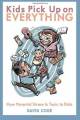 Saying that modern parents are stressed out is nothing new. What is new is the emphasis that David Arthur Code has in his book, Kids Pick Up On Everything. Code, who is a marriage and family coach as well as an ordained Episcopal minister, has lived in several countries around the world, which is how he came to see that socializing was a key element in the effort to reduce stress in parents. In writing his book, Code studied neuroscience in addition to collecting his own observations.
Here are three of his top points from the book as articulated by Code:
“1) Parental stress is a major factor in the increase of child disorders today. His research shows that kids soak up the stress in a household until their developing nervous systems hit ‘overload.’
2) Being stressed out is The New Normal for parents, and the main cause of our increased stress is NOT our jobs, or technology—it’s social isolation. Humans are social animals, with a primal need to bond. That’s why our increasing isolation has left us more anxious and irritable, eroding our relationships as we escape into our screens. Research shows we are far more isolated than only two decades ago.
3) Parents need to get a life! ‘If I could wave my magic wand and reduce the stress of today’s parents, I would give them a glass of wine, a friend, and a ‘piazza’–an Italian village square to go socialize in every evening.’ Sure, exercise buffers our stress, but socializing is #1.”
Another important idea Code discusses in his book comes from the fact that, while he observed families in South America, he learned that “it’s a myth that ‘the more attention you give your kids, the better they’ll turn out.’ Rather, the more time you socialize with other parents while your kids play together, the better they’ll turn out.”
‘My Life of Dad’ Dad Video Series Kicks Off
LifeOfDad.com, run by those fun and funny dudes who’ve brought you so many comic looks at fatherhood and so much opportunity to virtually bond with other dads, has a new video series called “My Life of Dad.” The premiere dad video interview is with the gutsy forward of one of the NBA’s current top teams, the L.A. Clippers’ Caron Butler. Kudos to director David Guest, producer Tom Riles, and the rest of the crew for giving us this window into a dedicated dad of five who just happens to star for Lob City, too.