


-


-

-
Search
-
Recent Posts
- Kryptowährungen Handeln Test – Wo sind kryptowährungen verboten?
- Sichere Krypto Börse – Kryptowährung wovon abhängig?
- Kryptologie Uni Ulm | Welche kryptowährungen haben potenzial?
- Scalping Kryptowährung – Wie viele kryptowährungen gibt es bei coinbase?
- Margin Trading Kryptowährungen Yahoo Finance – Warum steigen kryptowährungen so stark?
Blog Archive
June 2026 M T W T F S S « Aug 1 2 3 4 5 6 7 8 9 10 11 12 13 14 15 16 17 18 19 20 21 22 23 24 25 26 27 28 29 30 Categories
- Activities With Kids
- Adolescence
- Adulthood
- Aging
- Anger Management
- Apps
- Arts Education
- Babies
- Blog
- Books
- Boys to Men
- Breastfeeding
- Camp
- Cars
- Celebrity Dads
- Charity
- Child Development
- Children's Music Reviews
- Columns by Family Man
- Contests
- Creativity
- Dating Dad
- Death
- Divorced Dads
- Education
- Ethics
- Family Communication
- Family Man in the News
- Family Man Recommends
- Family Music
- Family Music Reviews
- Father's Day
- Featured Moms & Dads
- Film
- Food
- Free Stuff
- Friendship
- Gender
- Graduation
- Grandparents
- Halloween
- Health
- Helping Kids Understand Loss
- Holidays
- Humor
- Internet Safety
- LifeofDad.com
- Love and Courtship
- Marriage
- Morals
- Mother's Day
- Movies
- Music
- Newborns
- Over-parenting
- Parenting Stress
- Perspective
- Pets
- Politics
- Protecting Children
- Safety
- School
- Sex Ed
- Siblings
- Single Fathers
- Social Action
- Special Needs
- Sports
- Sweepstakes & Promotions
- Talking About Disasters
- Teens
- Top Ten Lists
- Travel
- Traveling With Kids
- TV
- Tweens
- Uncategorized
- Values
- Vasectomy
- Video
- What Dads Need to Know
- Work-Family Balance
Recent Comments
- Beth on The One That Ends With Hope
- Judi Feldman on The Brass Tacks of Music Education
- Fran Keer on A Road Well Traveled
- norman edelson on A Road Well Traveled
- Justin Rogan on The Gift of Boredom
- © 2026 - Gregory Keer. All rights reserved.
O Brother, Where Art Thou?
By Gregory Keer
Thanksgiving has long been my favorite holiday, for every reason from the marvelous meal to the four-day block of time to just be with family. Nine years ago, the festival took on extra meaning as my third child, Ari, was born just in time to celebrate at our table. And like Thanksgiving dinner, he’s been a third helping – sometimes the source of extra happiness and sometimes the wellspring of additional gastrointestinal discomfort.
A lot of my discomfort is self-imposed because I worry that, as my “third helping” of fatherhood, Ari has gotten less attention from me than my older kids received at the same age. Benjamin had 100% of me till he was three-and-a-half and Jacob got at least 50% of me for three years of his own. Ari has simply had to share my wife and me since the moment he was born.
I do try to compensate. Ari needs more of a push to do his homework than Benjamin or Jacob did. So, following a recent stretch of watching him whine (“You have no idea how hard third grade is, Dad!”) and seeing him bring home a bounty of red marker ink on his papers, I now help him kickstart the assignments. Ari also didn’t get any athletics coaching from me until last year, when I took on three sports like only a guilt-driven father can.
No matter how hard I try to give Ari more time, I still can’t make it to enough field trips or go to as many museums as I did for my first two boys. My wife struggles similarly with her allocation of hours, so we sat in bed one night during the holidays of last year and wondered aloud, “Shouldn’t Ari be getting more from his brothers to help fill in our gaps of attention?”
With six-and-a-half years between him and Ari, Benjamin has little in common with his little bro’ other than genetics. At 15, my eldest is seldom home and, when he does grace the house with his presence, he keeps the door shut like a moat-encircled drawbridge. For years, Ari tried politely knocking on the door to get Benjamin to play Legos or handball with him to minimal avail. More recently, Ari has busted into his brother’s privacy to annoy Benjamin’s buddies or steal the hidden candy Benjamin keeps in his desk. Most of their interactions end in tears – sometimes the tears are Ari’s.
Three years separate Jacob and Ari, which has helped them to connect more. Ari enjoyed three years on the same elementary-school campus with Jacob and benefited from his older brother’s tips about running for student council and participating with the school orchestra. Yet, their chronological proximity has also brought titanic wrestling matches, bone-chilling screams, and art supply thefts that go endlessly back and forth. Worse, Jacob’s burgeoning adolescence has led him to teach his brother bad language and a premature habit of commenting on lady parts.
I imagine it’s most parents’ wish that their children get along well enough to call each other best friends. While the minimal hope is that they’ll coordinate elder care for us when we became frail, we really want them to be there for each other. It’s especially valuable for Ari, who could learn so much from the siblings who have suffered through Mom and Dad the longest.
Despite the fights he gets into with the brothers and the jealousy he burns with every night they get to stay out late or receive a larger allowance, Ari’s plight as the “forgotten little man” has seen improvement over this last year. After lectures and chastisement from my wife and me, Benjamin is showing more compassion for Ari, who just wants more attention from him. When Benjamin babysits, he now doesn’t just badger Ari to get to bed, he reads books with him and helps him with math (two passions they’ve discovered they share). For his part, Jacob talks to Ari more than any of us, engaging him in conversations about friends, school, and TV shows they frequently watch together. Jacob also laughs a lot with his little brother, often because of crazy pranks they pull on Wendy and me.
As this Thanksgiving rolls up, I’m planning to do a little less worrying about Ari and a lot more admiring of the three brothers my wife and I have thrown together. Because of them, I don’t have to be the only one to fill my youngest child’s plate.
Evil Dad
By Gregory Keer
Following is a Halloween column that scared up some laughs a few years back. It’s back to haunt you intrepid readers, once again.
I don’t enjoy seeing car wrecks, reading about celebrity break-ups, or learning of the latest politician caught doing something illegal. But I do like witnessing other children behaving badly. I know it’s sinful, a little evil, even. That doesn’t stop the twisted inflation of my ego resulting from other parents having a similar or worse time than I usually have. Honestly, I do not wish misfortune on any parent — I just want to be there when it happens.
I didn’t always know I had this character flaw. For most of my fatherhood tenure, I’ve been too preoccupied to notice it while my own kids went through phases of throwing breakable items in grocery stores and telling friends that Santa Claus doesn’t really exist. My youngest boy, Ari, may be my biggest troublemaker. At an amusement park, the other day, he thought it was hilarious to randomly swat other grown-ups while I carried him through the crowd. I’m pretty sure he would have laughed harder should I have been punched in the nose by one of his surprised victims.
Although I know that all children misbehave at times – and that pushing boundaries can be healthy, especially when the stakes are low at the younger ages — I worry about the judgments of others who might see me as an ineffective parent. I sometimes fantasize about turning into a Dickens character, pulling my kids by the collar, and growling at them in a cockney accent, “Mind your manners, my urchins. It’s not wise to make your father look poorly.” (Actually, I did that once and my kids laughed at me).
But a recent conversation has allowed me to embrace my vampire-like desire to feed off other parents’ misery. During a basketball game for my oldest son, I watched a father on the sidelines, trying to give advice to his eight-year-old kid, who responded with, “Why should I listen to you, Daddy? You stink at shooting!”
Then, my friend Adam, a master of the witty aside, leaned toward me and said, “There’s a column for you. Write about how much fun it is to see other parents suffer.” We spent the rest of the game recounting tales from the parenting dark side. When once, as younger men, we might have shot the breeze about girlfriends, pro sports, and bad job experiences, we were now reduced to cackling gossips.
I told the story of the panicked mom who scoured a zoo in search of her missing son. When she finally found him in the dimly lit reptile center, in which she had looked twice before, she screamed, “Why did you go in here alone?” The child responded with the classic, “I don’t know.” As Mom launched the rest of her tirade, I tried to conceal my grin as other people escaped the house of snakes and the nearby baboons screamed along with the poor mother.
We talked about the father who leaped out of the stands to accuse the opposing coach of letting his players hit baseballs at his son on the pitcher’s mound. The agitated dad was just trying to be protective, but the tantrum stood out during a tee-ball game among five-year-olds who could barely tap a stationary ball. We took glee in the pain of the dad who, after overhearing his child refuse to share any of his toys, announced, “We’re really nice people. Please don’t judge us by our son.” And, in one of the more ugly examples, I noted the wicked thrill of seeing another parent get chewed out because his son bit my son, and not the other way around.
I am not proud of my primal need to feel better about my own failures by recalling the difficulties of others, but it does remind me of how absurd it is to try living up to the expectations of calm and wisdom most of us place upon ourselves. As this Halloween approaches, I won’t need a costume or candy. I’ll be the Evil Dad, feasting on the treats supplied by parents trying in vain to keep their kids in line in the dark of the night.
The Ongoing Concern of Over-Parenting
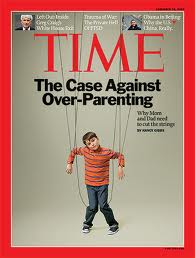 Huffington Post Parents posted this article: Is there such a thing as “too much parenting”?
What do you think? Give me an example of when you pulled back on the over-parenting. How did it work out for you?
I’ll start. My middle son almost never has shoes and socks on before getting in the car in the morning. Yesterday, after a number of run-ins with him about getting out of the house, I told him tomorrow was a new day. This morning, he pushed a bunch of my buttons (eating slowly, forgetting his water bottle, etc.), but he had this shoes on before leaving the house.
Trust me, this is one minor example of something that worked, but it’s a struggle for me to find the balance between being conscientious and helicopter. I want to take pride in guiding my kids, yet I want them to do stuff on their own and feel proud of it. There are lots of articles (including a good one from Time in 2009) and books on this topic, so let’s get our own conversation going.
For more about my own struggle with over-parenting vs. conscientious parenting, see Subtext.
David Code’s New Book on Socializing to Reduce Stress
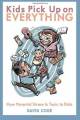 Saying that modern parents are stressed out is nothing new. What is new is the emphasis that David Arthur Code has in his book, Kids Pick Up On Everything. Code, who is a marriage and family coach as well as an ordained Episcopal minister, has lived in several countries around the world, which is how he came to see that socializing was a key element in the effort to reduce stress in parents. In writing his book, Code studied neuroscience in addition to collecting his own observations.
Here are three of his top points from the book as articulated by Code:
“1) Parental stress is a major factor in the increase of child disorders today. His research shows that kids soak up the stress in a household until their developing nervous systems hit ‘overload.’
2) Being stressed out is The New Normal for parents, and the main cause of our increased stress is NOT our jobs, or technology—it’s social isolation. Humans are social animals, with a primal need to bond. That’s why our increasing isolation has left us more anxious and irritable, eroding our relationships as we escape into our screens. Research shows we are far more isolated than only two decades ago.
3) Parents need to get a life! ‘If I could wave my magic wand and reduce the stress of today’s parents, I would give them a glass of wine, a friend, and a ‘piazza’–an Italian village square to go socialize in every evening.’ Sure, exercise buffers our stress, but socializing is #1.”
Another important idea Code discusses in his book comes from the fact that, while he observed families in South America, he learned that “it’s a myth that ‘the more attention you give your kids, the better they’ll turn out.’ Rather, the more time you socialize with other parents while your kids play together, the better they’ll turn out.”
Post Disaster Tips for SheKnows.com
In the midst of these very difficult times for people on the East Coast, Tom Riles, the founder of LifeOfDad.com, has written and promoted content to help support those enduring the disaster and the rest of us who need to understand what our fellow parents are going through. He also connected me with the editors at SheKnows.com, who asked for post disaster tips that answer the kinds of questions children are asking after the superstorm.
What Dads Need to Know: Growing Up with a Biter
By Stefanie Wilder-Taylor
Little Sadie is a biter. Yes, it’s true. Adorable Sadie of the itty bitty butt and teeny tiny thighs still manages to assert herself by doling out quick and quite painful bites when you least expect it. Her main victim is Matilda who now has bruises up and down her arms that are simply begging someone to call CPS on me. This had been going on for months and months already but Jon and I kept making excuses for her: she’s frustrated from her lack of ability to communicate, she was bitten by Matilda when she was really little, she hates sharing, Mattie’s arm is delicious…and on and on. But last week things came to a head: Mattie was minding her own business (post tantrum) lying on the floor sucking on a taggy blanket when Sadie hopped up from across the room, sauntered over to Mattie, bent down as if to kiss her and chomped down on her arm — hard. I ran over to comfort Matilda but had a dilemma on my hands: do I punish Sadie first or comfort Mattie first?
I’d already escalated my discipline techniques from “No discipline whatsoever because, hey, she’s just a baby” to a sharp “No!” to a sharper “Stop!” and finally to a time out which involves scooping Sadie up and dumping her unceremoniously in her crib. The problem is, Sadie has no concept that she’s being punished. She doesn’t see her crib as being the crate of torture that Mattie does and is perfectly content to hang out, smoke a candy cigarette and read a little Pet the Baby Animals until I give up on waiting for her to cry and go get her.
Up until that last biting incident, most of the attacks had seemed somewhat provoked. A toy taken away, string cheese pilfered, Mattie just being in the wrong place at the wrong time etc. but this one was different. This was premeditated biting! What kind of a sociopath crosses the room, chomps their sister like she’s a leg of El Pollo Loco and then skips off whistling Twinkle Twinkle Little Star? Sadie, that’s who.
I decided to call in the big guns; my early intervention team. If there’s any bonus to having a delayed child it’s access to services you normal wouldn’t have. Yesterday, a child development specialist came over with Sadie’s case manager to work on Sadie’s play skillz. Cause Sadie’s got mad skillz y’all. This double therapist session was after a long day of PT (physical therapy), speech and OT (occupational therapy)so I wrongly assumed that Sadie would be in frustrated, tired, lashing out form. But nooooooo. Just like a pint-sized Ted Bundy, Sadie charmed the shit out of all our guests by saying hello to everyone in sight, pretending to roll calls with her Diego cell phone, giggling maniacally and repeatedly clapping her hands over her head yelling “hooray!”
Luckily, nobody can keep that up for an entire hour and eventually even Sadie broke down and pinched a few folks. It was decided that although biting, pushing and pinching are typical twin behaviors, Sadie does have the added frustration of lagging language, competition with not only her twin but an older sibling and the added cross to bear of an overly attractive and quite young looking mother. Who wouldn’t want to bite a few people? Still, we were told to continue giving time outs very consistently and to start signing with Sadie. Plus, we are going to be getting regular play therapy which thankfully will include Matilda. Poor Matilda, if we don’t correct this problem soon I fear her childhood will eventually become a Lifetime movie. Scarred for Life: One Twin’s True Tale of Growing Up with a Biter. Of course, if that happens I hope it’s sort of soon because I don’t want Tori Spelling to be aged out of playing the part of Sadie. Lifetime, you know where to find me.
Stefanie Wilder-Taylor is the author of Sippy Cups Are Not for Chardonnay, Naptime Is the New Happy Hour, It’s Not Me, It’s You, and her more recent book, I’m Kind of a Big Deal. She lives in Los Angeles with a husband and three young daughters. Anything else you need to know will probably be on her blog at stefaniewildertaylor.com.
Surviving Shopping with Kids
By Gregory Keer
I am usually a last-minute shopper, which makes things even more intense. But as life gets busier, I’ve found that thinking ahead — if not shopping in advance — can go a long way toward making gift buying much easier. I’ve tried all of the following (though not always in the same year), which can help you manage this crazy season.
1. Have Fun
First, if you really think about, shopping for kids is one of life’s true pleasures. Buying something you worked hard to pay for and that you chose just for your child is wonderful. It’s also a way to live vicariously through your kids, buying things you would’ve liked to play with and certainly items you want to use in interacting with your kids. That being said, this is all a stressful proposition that you should plan for, so…
2. Lower Stress
Start early and shop at odd hours to lower the stress level. And don’t shop hungry — low blood sugar or high blood sugar can be dangerous (for you and the kids)!
3. Money Isn’t Everything
Set a budget and perhaps a number of toys you plan to get. Remember that grandparents and friends may give gifts, so do not feel pressured to ply your child with too much. They will ignore most of their toys within days if not minutes. You might even consider giving your little one a box to play with. No joke, but kids can hide, make puppet shows, forts, and more with just a big old box.
4. Age Appropriateness
Especially for younger kids, opt for items that require children to manipulate them. Too many electronic games do stuff automatically. Children develop motor skills and cognitive skills with toys they can build, stack, and color. Toys that multitask and can be combined with other things. Imagination is key – cars, character sets, i.e., Rescue Heroes and Barbies.
For the older kids, video and computer games are hard to avoid. Decide how much violence you want them to see in these games. Some research says these games are actually healthy, though never in large doses. Older kids tend to also like clothes, music, DVDs, and even cash to spend how they wish. With younger kids, you will shop with them, but older ones might like to get a budget and shop for themselves. Giving them money helps them focus on the task at hand and may get them in the spirit of giving. They may even do some additional chores to earn extra money.
5. Balance What They Want with What They Should Have
If you want guaranteed smiles, be sure to buy kids at least something that they asked for. On the other hand, you can select one or two things you think they should have, something education or challenging. If you’re really clever, you can lobby onto your child’s wish list if you make subtle suggestions like, “Your friend Jacob has a chemistry set. Isn’t that cool?”
6. Gender Gap
The gap is thinner than it used to be now that young boys will play with dolls and young girls covet baseball mitts. Even older boys are more into clothes than they used to be. Still, young boys favor trucks, superheroes, and trains while girls love dress-up clothes — princesses are bigger than ever — dolls, and fashion accessories. That being said, a creative purchase for boys or girls is costumes for imaginative play.
7. Types of Stores
Toy stores, video game stores, book stores, shoe stores, clothing stores, sporting goods shops. Bookstores are especially fine places to shop and not feel guilty. Think about balancing your list with items from the above kinds of stores.
Fun Ways to Make Lists
1. Stay Focused
Go in with a list to limit the tantrums and negotiations. You will probably have a fair amount of repartee with your child, simply because toy stores are meant to overwhelm parents and kids with all that can be had. So don’t expect a pain-free experience. On the other hand, do expect to have a good time. Pay attention at birthday parties; see what kids get and like. Pay attention at playdates and other social visits. What does your child love? If they can write (or need the practice), have them write their own list.
2. Prioritize
Kids ask for things all the time. On the list, prioritize those items that they ask for more than once or twice.
3. Written Promises
Whatever your child doesn’t get, write the item down on a new list for their birthday or next year. This will lessen the crying and whining
A Nifty Trick & A Warning
1. Try hiding some still-packaged toys and pulling them out of the closet for well-timed opportunities throughout the year.
2. Regarding toy safety, it’s best to stick with box recommendations and use your good sense about potentially dangerous toys.
While anxiety is an organic element of holiday shopping, these suggestions can truly help you minimize some of the big issues. The more you plan in advance, the more this experience will be about spending time with and teaching your kids a few things about the world of commerce.
We Build: On the 10th Anniversary of the Events of 9/11
By Gregory Keer
This month, we mark the 10th year since the terrorist attacks of September 11, 2001, when innocent Americans died in New York, Virginia, and Pennsylvania. Since that time, my oldest son has become a teenager while two of my children have been born into this world in which fear and hatred too often diminish the beauty human beings can and often do show.
As a way to commemorate 9/11, I wanted to look back on what was going through my own mind as a parent the day after the terrible events, to gain perspective. I hope this piece will encourage you to think as well and perhaps to discuss with your children ways to feel more secure in a too often uncertain society.
***
My son was born on the same day, in the same hospital, as his friend Ethan.
Our families had become friends during our mutual first pregnancies. After the birth of the boys, we saw each other at least once a week, went to parent-and-me classes together, and talked all the time. If it were possible to marry another family, we would have married the Ansorges. But not long ago, our friends moved to Manhattan when Mark’s job was transferred.
On September 11, the distance became greater. That morning, little Ethan walked with his mommy to preschool and watched a plane slice into the World Trade Center. Ethan and Deborah struggled to get home in the ensuing pandemonium that convulsed New York City.
All the while Ethan asked, “Mommy, why did the plane crash into that building?”
No physical harm came to Ethan and, soon after witnessing the horrific tragedy, he was home, cuddling with his parents who cherished their very existence.
Ethan and his parents’ experience clarifies one simple thing amidst the human devastation and unending confusion brought on by that day’s events: We are still better at loving than we are at destroying.
Don’t get me wrong. I am angry, perplexed, and cynical about much of the way our world works. I am scraped raw, emotionally, when I think of that father on the flight that crashed in a Pennsylvania field. This is the man who called his wife and told her he would fight the terrorists before they did greater harm. This is the man who urged his wife and child to have a good life.
As much as this story weakens me, it also fortifies my belief that love prevails in the face of any disaster. We build on love, for love of each other. We are better at building than destroying.
And, as simplistic as it sounds, the concept of family is perhaps the greatest structure on which to build on love’s foundation. I know I might sound flower-childish or naïve. But I am struggling to be positive and state the obvious: We are a family of human beings. Like family members, we often treat each other brutally — but not as much as we treat each other lovingly.
The metaphorical, if not literal, powers of family reach everywhere. I feel that most of the sentiments expressed by world leaders and residents of other lands were heartfelt. They recognize the pain of wives who have lost husbands, of children who have lost parents. They have lost, too.
Within our own community, parents are talking with their children to ease their worries. One parent was dealing with a four-year-old son who was inquiring about the “evil tourists” (meaning terrorists) while trying to help another son who was shell shocked by the tragedy.
Another parent has a daughter who asked, “Were there any mommies or daddies in the buildings” of the World Trade Center. At the same time, these parents are giving blood and talking with each other to soothe fears.
Repeatedly, we prove ourselves to be better at bonding than at disintegrating. We may be more motivated at this time, but most of us act on our desires to respect and understand. We are also teaching our children these values.
My wife and I put our son in a multicultural day care. He has befriended kids with of an amazing array of cultural backgrounds, from West Indian to Palestinian. He sometimes blatantly states differences he has with others: “Why is Nicholas brown?” or “Why is that girl talking Spanish?” We are embarrassed at first, then we watch him hugging and giggling with these young people.
At our foundation, we are a family. No terrorists can crack the foundation because it is made of stronger stuff than metal, concrete, or even flesh and blood. It is made of love. And so we continue to build.
Book Preview: ‘Go the F*** to Sleep’
There’s a new picture book that has parents around the world buzzing. It’s so hot that, in advance of it going on the market in October of this year, it has already cracked Amazon’s top 300 list because of presales. No, it’s not a previously undiscovered Dr. Seuss. It’s a story that’s actually meant for grown ups called Go the F*** to Sleep.
My friend Geoff Silverman brought this little tome to my attention and I got a sneak peek into something that should hit the funny bone of many parents because of its crass but true sentiments. Written by acclaimed novelist Adam Mansbach (recently of Angry Black White Boy) with illustrations by Ricardo Cortes, the book imitates Goodnight Moon (the classic bedtime story from Margaret Wise Brown and illustrator Clement Hurd) as it uses calming poetry full of nature-oriented symbolism before it whacks you over the head with what the parent reciting the poetry realizes: his child will not go to sleep! With each page, the narrator tries to regroup to help his child slumber, but the kid won’t go down. As such, the parent curses up a blue streak in ever-deepening frustration. Frankly, it says what many of us feel bubbling beneath the surface when a son or daughter continues to eat away at our precious down time.
This is very obviously not meant to be read to kids, and the back cover has a warning stating this. However, if you can handle a bit of off-color humor, this is a book parents will laugh heartily over. See the Amazon page at http://www.amazon.com/Go-F-Sleep-Adam-Mansbach/dp/1617750255.
What Dads Need to Know: Overabundant Gushing
By Laura Diamond
It was a Sunday, filled with the promise of flaky warm croissants and bursting red strawberries. We walked toward the Farmer’s market in town, my younger son Emmett concentrating mightily on bouncing a ball. New and delicate stuff, this dribbling. The ball got away quickly; two or three bounces then he’s chasing it into the bushes. But he had decided that he liked basketball, and he was determined to figure this out.
I watched him retrieve the ball from the neighbors’ newly-planted pansies, and my every cell vibrated with the effort not to scoop him up, squeeze him and tell him he’s scrumptious. But I controlled myself.
I wish I had controlled the next impulse, which was to innocently bestow encouragement and praise: “You’ve really improved in basketball!”
At once his face darkened and his spirit shriveled. He stopped walking, dropped the ball, crossed his arms, stared daggers at me and said through red teary eyes: “You hurt my feelings.” He resumed walking, but without the bounce and joy from before. “I wish you weren’t my mom. I wish you weren’t alive.” His words didn’t cut me nearly as much as knowing the depth of the hurt I’d caused him.
Parenthood is too powerful; it’s so easy to screw up. With one well-intentioned sentence, you can shift a morning, change the hue of a day, sear an indelible memory. When I was a teenager, my dad used to joke whenever he’d do something odd or possibly irritating, “This isn’t going to send you to the psychiatrist’s couch years from now, is it?” I can still see his impish smile and hear his voice as he asked the question. Only now, through the lens of parenthood, I think I hear a pleading behind the laughter: “Please say I haven’t messed up too badly; please say you’ll weather my mistakes.”
When I was a new mother, with one fragile infant in my charge, I attended a weekly parenting class with religious devotion. Between sessions I’d collect my questions and concerns, desperate to have wise Tandy Parks weigh in. I still carry her advice with me, most of it embedded deeply in the whirls of my brain. But one piece of wisdom resides in the accessible upper reaches of gray matter. It is this: Children don’t need perfect parents; they need “good enough.” She was letting us off the hook for the mistakes we’d all make.
As for Emmett, there was nothing I could do or say to take back my unintentional wound. Only the sight of his older brother Aaron waving croissants from across the street lured him from his melancholy. Sampling the strawberries and oranges on the farmers’ tables took his mind off our sorrowful walk. By the time we headed home, arms laden with fresh goodies, I hoped he had forgotten.
His face was calm as we neared our house. And then we got to the fateful square of sidewalk, next to the pansies, and he was reminded of what was said there an hour earlier. He stopped walking, his face fell, crushed anew by the memory of my words. Then he spoke, his voice a quiet mix of understanding and regret. “It’s okay that you said that, Mom.”
I don’t know in what sense he meant it was okay. Okay, he forgave me? Okay, he’d still let me play with him, read him books, kiss and hug him as much as possible? Okay, he’s willing to overlook my flaws? Willing to accept his own? I knew better than to push for an explanation. I was just glad that he was talking to me again.
A week later, walking home from school, he heard me tell the mother of two little girls racing past us in matching sparkly sneakers that they were “so cool.” His steady voice down by my hip said, so quietly that I had to ask him to repeat it, “How come you never say that me and Aaron are cool?”
This can’t be. I am an effusive mom! I am, aren’t I?
“I don’t?” I leaned down and asked him.
“No.”
He needed me to lay it on thick. “Well, I think you’re the coolest ever. Amazing and awesome and cool and wonderful. And I love you so much.”
And so he reminded me, again and again, that the little moments that constitute our days—the ones we don’t think twice about—are rich with meaning. Tonight at bedtime, after stories and kisses and hugs, I wished them sweet dreams and asked, “Did I tell you enough times today that I love you?” They sighed and rolled their eyes, but I saw the glimmer of contentedness on their faces as they relaxed into their pillows. I give thanks for the child who told me he needed more than I was giving. I give thanks for the teacher who said it is okay to make mistakes. I give thanks for parents who worried about the effects of their own mistakes. And I am a convert to the religion of overabundant gushing; I’m praying that too much will be enough.
Laura Diamond is the editor of Deliver Me: True Confessions of Motherhood, a collection of true stories about motherhood “that enlightens and inspires, evoking tears, laughter and, most of all, the YES of recognition.” More of Laura’s essays can be read at Laura Diamond Writes On…
O Brother, Where Art Thou?
By Gregory Keer
Thanksgiving has long been my favorite holiday, for every reason from the marvelous meal to the four-day block of time to just be with family. Nine years ago, the festival took on extra meaning as my third child, Ari, was born just in time to celebrate at our table. And like Thanksgiving dinner, he’s been a third helping – sometimes the source of extra happiness and sometimes the wellspring of additional gastrointestinal discomfort.
A lot of my discomfort is self-imposed because I worry that, as my “third helping” of fatherhood, Ari has gotten less attention from me than my older kids received at the same age. Benjamin had 100% of me till he was three-and-a-half and Jacob got at least 50% of me for three years of his own. Ari has simply had to share my wife and me since the moment he was born.
I do try to compensate. Ari needs more of a push to do his homework than Benjamin or Jacob did. So, following a recent stretch of watching him whine (“You have no idea how hard third grade is, Dad!”) and seeing him bring home a bounty of red marker ink on his papers, I now help him kickstart the assignments. Ari also didn’t get any athletics coaching from me until last year, when I took on three sports like only a guilt-driven father can.
No matter how hard I try to give Ari more time, I still can’t make it to enough field trips or go to as many museums as I did for my first two boys. My wife struggles similarly with her allocation of hours, so we sat in bed one night during the holidays of last year and wondered aloud, “Shouldn’t Ari be getting more from his brothers to help fill in our gaps of attention?”
With six-and-a-half years between him and Ari, Benjamin has little in common with his little bro’ other than genetics. At 15, my eldest is seldom home and, when he does grace the house with his presence, he keeps the door shut like a moat-encircled drawbridge. For years, Ari tried politely knocking on the door to get Benjamin to play Legos or handball with him to minimal avail. More recently, Ari has busted into his brother’s privacy to annoy Benjamin’s buddies or steal the hidden candy Benjamin keeps in his desk. Most of their interactions end in tears – sometimes the tears are Ari’s.
Three years separate Jacob and Ari, which has helped them to connect more. Ari enjoyed three years on the same elementary-school campus with Jacob and benefited from his older brother’s tips about running for student council and participating with the school orchestra. Yet, their chronological proximity has also brought titanic wrestling matches, bone-chilling screams, and art supply thefts that go endlessly back and forth. Worse, Jacob’s burgeoning adolescence has led him to teach his brother bad language and a premature habit of commenting on lady parts.
I imagine it’s most parents’ wish that their children get along well enough to call each other best friends. While the minimal hope is that they’ll coordinate elder care for us when we became frail, we really want them to be there for each other. It’s especially valuable for Ari, who could learn so much from the siblings who have suffered through Mom and Dad the longest.
Despite the fights he gets into with the brothers and the jealousy he burns with every night they get to stay out late or receive a larger allowance, Ari’s plight as the “forgotten little man” has seen improvement over this last year. After lectures and chastisement from my wife and me, Benjamin is showing more compassion for Ari, who just wants more attention from him. When Benjamin babysits, he now doesn’t just badger Ari to get to bed, he reads books with him and helps him with math (two passions they’ve discovered they share). For his part, Jacob talks to Ari more than any of us, engaging him in conversations about friends, school, and TV shows they frequently watch together. Jacob also laughs a lot with his little brother, often because of crazy pranks they pull on Wendy and me.
As this Thanksgiving rolls up, I’m planning to do a little less worrying about Ari and a lot more admiring of the three brothers my wife and I have thrown together. Because of them, I don’t have to be the only one to fill my youngest child’s plate.
Evil Dad
By Gregory Keer
Following is a Halloween column that scared up some laughs a few years back. It’s back to haunt you intrepid readers, once again.
I don’t enjoy seeing car wrecks, reading about celebrity break-ups, or learning of the latest politician caught doing something illegal. But I do like witnessing other children behaving badly. I know it’s sinful, a little evil, even. That doesn’t stop the twisted inflation of my ego resulting from other parents having a similar or worse time than I usually have. Honestly, I do not wish misfortune on any parent — I just want to be there when it happens.
I didn’t always know I had this character flaw. For most of my fatherhood tenure, I’ve been too preoccupied to notice it while my own kids went through phases of throwing breakable items in grocery stores and telling friends that Santa Claus doesn’t really exist. My youngest boy, Ari, may be my biggest troublemaker. At an amusement park, the other day, he thought it was hilarious to randomly swat other grown-ups while I carried him through the crowd. I’m pretty sure he would have laughed harder should I have been punched in the nose by one of his surprised victims.
Although I know that all children misbehave at times – and that pushing boundaries can be healthy, especially when the stakes are low at the younger ages — I worry about the judgments of others who might see me as an ineffective parent. I sometimes fantasize about turning into a Dickens character, pulling my kids by the collar, and growling at them in a cockney accent, “Mind your manners, my urchins. It’s not wise to make your father look poorly.” (Actually, I did that once and my kids laughed at me).
But a recent conversation has allowed me to embrace my vampire-like desire to feed off other parents’ misery. During a basketball game for my oldest son, I watched a father on the sidelines, trying to give advice to his eight-year-old kid, who responded with, “Why should I listen to you, Daddy? You stink at shooting!”
Then, my friend Adam, a master of the witty aside, leaned toward me and said, “There’s a column for you. Write about how much fun it is to see other parents suffer.” We spent the rest of the game recounting tales from the parenting dark side. When once, as younger men, we might have shot the breeze about girlfriends, pro sports, and bad job experiences, we were now reduced to cackling gossips.
I told the story of the panicked mom who scoured a zoo in search of her missing son. When she finally found him in the dimly lit reptile center, in which she had looked twice before, she screamed, “Why did you go in here alone?” The child responded with the classic, “I don’t know.” As Mom launched the rest of her tirade, I tried to conceal my grin as other people escaped the house of snakes and the nearby baboons screamed along with the poor mother.
We talked about the father who leaped out of the stands to accuse the opposing coach of letting his players hit baseballs at his son on the pitcher’s mound. The agitated dad was just trying to be protective, but the tantrum stood out during a tee-ball game among five-year-olds who could barely tap a stationary ball. We took glee in the pain of the dad who, after overhearing his child refuse to share any of his toys, announced, “We’re really nice people. Please don’t judge us by our son.” And, in one of the more ugly examples, I noted the wicked thrill of seeing another parent get chewed out because his son bit my son, and not the other way around.
I am not proud of my primal need to feel better about my own failures by recalling the difficulties of others, but it does remind me of how absurd it is to try living up to the expectations of calm and wisdom most of us place upon ourselves. As this Halloween approaches, I won’t need a costume or candy. I’ll be the Evil Dad, feasting on the treats supplied by parents trying in vain to keep their kids in line in the dark of the night.
The Ongoing Concern of Over-Parenting
Huffington Post Parents posted this article: Is there such a thing as “too much parenting”?
What do you think? Give me an example of when you pulled back on the over-parenting. How did it work out for you?
I’ll start. My middle son almost never has shoes and socks on before getting in the car in the morning. Yesterday, after a number of run-ins with him about getting out of the house, I told him tomorrow was a new day. This morning, he pushed a bunch of my buttons (eating slowly, forgetting his water bottle, etc.), but he had this shoes on before leaving the house.
Trust me, this is one minor example of something that worked, but it’s a struggle for me to find the balance between being conscientious and helicopter. I want to take pride in guiding my kids, yet I want them to do stuff on their own and feel proud of it. There are lots of articles (including a good one from Time in 2009) and books on this topic, so let’s get our own conversation going.
For more about my own struggle with over-parenting vs. conscientious parenting, see Subtext.
David Code’s New Book on Socializing to Reduce Stress
Saying that modern parents are stressed out is nothing new. What is new is the emphasis that David Arthur Code has in his book, Kids Pick Up On Everything. Code, who is a marriage and family coach as well as an ordained Episcopal minister, has lived in several countries around the world, which is how he came to see that socializing was a key element in the effort to reduce stress in parents. In writing his book, Code studied neuroscience in addition to collecting his own observations.
Here are three of his top points from the book as articulated by Code:
“1) Parental stress is a major factor in the increase of child disorders today. His research shows that kids soak up the stress in a household until their developing nervous systems hit ‘overload.’
2) Being stressed out is The New Normal for parents, and the main cause of our increased stress is NOT our jobs, or technology—it’s social isolation. Humans are social animals, with a primal need to bond. That’s why our increasing isolation has left us more anxious and irritable, eroding our relationships as we escape into our screens. Research shows we are far more isolated than only two decades ago.
3) Parents need to get a life! ‘If I could wave my magic wand and reduce the stress of today’s parents, I would give them a glass of wine, a friend, and a ‘piazza’–an Italian village square to go socialize in every evening.’ Sure, exercise buffers our stress, but socializing is #1.”
Another important idea Code discusses in his book comes from the fact that, while he observed families in South America, he learned that “it’s a myth that ‘the more attention you give your kids, the better they’ll turn out.’ Rather, the more time you socialize with other parents while your kids play together, the better they’ll turn out.”
Post Disaster Tips for SheKnows.com
In the midst of these very difficult times for people on the East Coast, Tom Riles, the founder of LifeOfDad.com, has written and promoted content to help support those enduring the disaster and the rest of us who need to understand what our fellow parents are going through. He also connected me with the editors at SheKnows.com, who asked for post disaster tips that answer the kinds of questions children are asking after the superstorm.
What Dads Need to Know: Growing Up with a Biter
By Stefanie Wilder-Taylor
Little Sadie is a biter. Yes, it’s true. Adorable Sadie of the itty bitty butt and teeny tiny thighs still manages to assert herself by doling out quick and quite painful bites when you least expect it. Her main victim is Matilda who now has bruises up and down her arms that are simply begging someone to call CPS on me. This had been going on for months and months already but Jon and I kept making excuses for her: she’s frustrated from her lack of ability to communicate, she was bitten by Matilda when she was really little, she hates sharing, Mattie’s arm is delicious…and on and on. But last week things came to a head: Mattie was minding her own business (post tantrum) lying on the floor sucking on a taggy blanket when Sadie hopped up from across the room, sauntered over to Mattie, bent down as if to kiss her and chomped down on her arm — hard. I ran over to comfort Matilda but had a dilemma on my hands: do I punish Sadie first or comfort Mattie first?
I’d already escalated my discipline techniques from “No discipline whatsoever because, hey, she’s just a baby” to a sharp “No!” to a sharper “Stop!” and finally to a time out which involves scooping Sadie up and dumping her unceremoniously in her crib. The problem is, Sadie has no concept that she’s being punished. She doesn’t see her crib as being the crate of torture that Mattie does and is perfectly content to hang out, smoke a candy cigarette and read a little Pet the Baby Animals until I give up on waiting for her to cry and go get her.
Up until that last biting incident, most of the attacks had seemed somewhat provoked. A toy taken away, string cheese pilfered, Mattie just being in the wrong place at the wrong time etc. but this one was different. This was premeditated biting! What kind of a sociopath crosses the room, chomps their sister like she’s a leg of El Pollo Loco and then skips off whistling Twinkle Twinkle Little Star? Sadie, that’s who.
I decided to call in the big guns; my early intervention team. If there’s any bonus to having a delayed child it’s access to services you normal wouldn’t have. Yesterday, a child development specialist came over with Sadie’s case manager to work on Sadie’s play skillz. Cause Sadie’s got mad skillz y’all. This double therapist session was after a long day of PT (physical therapy), speech and OT (occupational therapy)so I wrongly assumed that Sadie would be in frustrated, tired, lashing out form. But nooooooo. Just like a pint-sized Ted Bundy, Sadie charmed the shit out of all our guests by saying hello to everyone in sight, pretending to roll calls with her Diego cell phone, giggling maniacally and repeatedly clapping her hands over her head yelling “hooray!”
Luckily, nobody can keep that up for an entire hour and eventually even Sadie broke down and pinched a few folks. It was decided that although biting, pushing and pinching are typical twin behaviors, Sadie does have the added frustration of lagging language, competition with not only her twin but an older sibling and the added cross to bear of an overly attractive and quite young looking mother. Who wouldn’t want to bite a few people? Still, we were told to continue giving time outs very consistently and to start signing with Sadie. Plus, we are going to be getting regular play therapy which thankfully will include Matilda. Poor Matilda, if we don’t correct this problem soon I fear her childhood will eventually become a Lifetime movie. Scarred for Life: One Twin’s True Tale of Growing Up with a Biter. Of course, if that happens I hope it’s sort of soon because I don’t want Tori Spelling to be aged out of playing the part of Sadie. Lifetime, you know where to find me.
Stefanie Wilder-Taylor is the author of Sippy Cups Are Not for Chardonnay, Naptime Is the New Happy Hour, It’s Not Me, It’s You, and her more recent book, I’m Kind of a Big Deal. She lives in Los Angeles with a husband and three young daughters. Anything else you need to know will probably be on her blog at stefaniewildertaylor.com.
Surviving Shopping with Kids
By Gregory Keer
I am usually a last-minute shopper, which makes things even more intense. But as life gets busier, I’ve found that thinking ahead — if not shopping in advance — can go a long way toward making gift buying much easier. I’ve tried all of the following (though not always in the same year), which can help you manage this crazy season.
1. Have Fun
First, if you really think about, shopping for kids is one of life’s true pleasures. Buying something you worked hard to pay for and that you chose just for your child is wonderful. It’s also a way to live vicariously through your kids, buying things you would’ve liked to play with and certainly items you want to use in interacting with your kids. That being said, this is all a stressful proposition that you should plan for, so…
2. Lower Stress
Start early and shop at odd hours to lower the stress level. And don’t shop hungry — low blood sugar or high blood sugar can be dangerous (for you and the kids)!
3. Money Isn’t Everything
Set a budget and perhaps a number of toys you plan to get. Remember that grandparents and friends may give gifts, so do not feel pressured to ply your child with too much. They will ignore most of their toys within days if not minutes. You might even consider giving your little one a box to play with. No joke, but kids can hide, make puppet shows, forts, and more with just a big old box.
4. Age Appropriateness
Especially for younger kids, opt for items that require children to manipulate them. Too many electronic games do stuff automatically. Children develop motor skills and cognitive skills with toys they can build, stack, and color. Toys that multitask and can be combined with other things. Imagination is key – cars, character sets, i.e., Rescue Heroes and Barbies.
For the older kids, video and computer games are hard to avoid. Decide how much violence you want them to see in these games. Some research says these games are actually healthy, though never in large doses. Older kids tend to also like clothes, music, DVDs, and even cash to spend how they wish. With younger kids, you will shop with them, but older ones might like to get a budget and shop for themselves. Giving them money helps them focus on the task at hand and may get them in the spirit of giving. They may even do some additional chores to earn extra money.
5. Balance What They Want with What They Should Have
If you want guaranteed smiles, be sure to buy kids at least something that they asked for. On the other hand, you can select one or two things you think they should have, something education or challenging. If you’re really clever, you can lobby onto your child’s wish list if you make subtle suggestions like, “Your friend Jacob has a chemistry set. Isn’t that cool?”
6. Gender Gap
The gap is thinner than it used to be now that young boys will play with dolls and young girls covet baseball mitts. Even older boys are more into clothes than they used to be. Still, young boys favor trucks, superheroes, and trains while girls love dress-up clothes — princesses are bigger than ever — dolls, and fashion accessories. That being said, a creative purchase for boys or girls is costumes for imaginative play.
7. Types of Stores
Toy stores, video game stores, book stores, shoe stores, clothing stores, sporting goods shops. Bookstores are especially fine places to shop and not feel guilty. Think about balancing your list with items from the above kinds of stores.
Fun Ways to Make Lists
1. Stay Focused
Go in with a list to limit the tantrums and negotiations. You will probably have a fair amount of repartee with your child, simply because toy stores are meant to overwhelm parents and kids with all that can be had. So don’t expect a pain-free experience. On the other hand, do expect to have a good time. Pay attention at birthday parties; see what kids get and like. Pay attention at playdates and other social visits. What does your child love? If they can write (or need the practice), have them write their own list.
2. Prioritize
Kids ask for things all the time. On the list, prioritize those items that they ask for more than once or twice.
3. Written Promises
Whatever your child doesn’t get, write the item down on a new list for their birthday or next year. This will lessen the crying and whining
A Nifty Trick & A Warning
1. Try hiding some still-packaged toys and pulling them out of the closet for well-timed opportunities throughout the year.
2. Regarding toy safety, it’s best to stick with box recommendations and use your good sense about potentially dangerous toys.
While anxiety is an organic element of holiday shopping, these suggestions can truly help you minimize some of the big issues. The more you plan in advance, the more this experience will be about spending time with and teaching your kids a few things about the world of commerce.
We Build: On the 10th Anniversary of the Events of 9/11
By Gregory Keer
This month, we mark the 10th year since the terrorist attacks of September 11, 2001, when innocent Americans died in New York, Virginia, and Pennsylvania. Since that time, my oldest son has become a teenager while two of my children have been born into this world in which fear and hatred too often diminish the beauty human beings can and often do show.
As a way to commemorate 9/11, I wanted to look back on what was going through my own mind as a parent the day after the terrible events, to gain perspective. I hope this piece will encourage you to think as well and perhaps to discuss with your children ways to feel more secure in a too often uncertain society.
***
My son was born on the same day, in the same hospital, as his friend Ethan.
Our families had become friends during our mutual first pregnancies. After the birth of the boys, we saw each other at least once a week, went to parent-and-me classes together, and talked all the time. If it were possible to marry another family, we would have married the Ansorges. But not long ago, our friends moved to Manhattan when Mark’s job was transferred.
On September 11, the distance became greater. That morning, little Ethan walked with his mommy to preschool and watched a plane slice into the World Trade Center. Ethan and Deborah struggled to get home in the ensuing pandemonium that convulsed New York City.
All the while Ethan asked, “Mommy, why did the plane crash into that building?”
No physical harm came to Ethan and, soon after witnessing the horrific tragedy, he was home, cuddling with his parents who cherished their very existence.
Ethan and his parents’ experience clarifies one simple thing amidst the human devastation and unending confusion brought on by that day’s events: We are still better at loving than we are at destroying.
Don’t get me wrong. I am angry, perplexed, and cynical about much of the way our world works. I am scraped raw, emotionally, when I think of that father on the flight that crashed in a Pennsylvania field. This is the man who called his wife and told her he would fight the terrorists before they did greater harm. This is the man who urged his wife and child to have a good life.
As much as this story weakens me, it also fortifies my belief that love prevails in the face of any disaster. We build on love, for love of each other. We are better at building than destroying.
And, as simplistic as it sounds, the concept of family is perhaps the greatest structure on which to build on love’s foundation. I know I might sound flower-childish or naïve. But I am struggling to be positive and state the obvious: We are a family of human beings. Like family members, we often treat each other brutally — but not as much as we treat each other lovingly.
The metaphorical, if not literal, powers of family reach everywhere. I feel that most of the sentiments expressed by world leaders and residents of other lands were heartfelt. They recognize the pain of wives who have lost husbands, of children who have lost parents. They have lost, too.
Within our own community, parents are talking with their children to ease their worries. One parent was dealing with a four-year-old son who was inquiring about the “evil tourists” (meaning terrorists) while trying to help another son who was shell shocked by the tragedy.
Another parent has a daughter who asked, “Were there any mommies or daddies in the buildings” of the World Trade Center. At the same time, these parents are giving blood and talking with each other to soothe fears.
Repeatedly, we prove ourselves to be better at bonding than at disintegrating. We may be more motivated at this time, but most of us act on our desires to respect and understand. We are also teaching our children these values.
My wife and I put our son in a multicultural day care. He has befriended kids with of an amazing array of cultural backgrounds, from West Indian to Palestinian. He sometimes blatantly states differences he has with others: “Why is Nicholas brown?” or “Why is that girl talking Spanish?” We are embarrassed at first, then we watch him hugging and giggling with these young people.
At our foundation, we are a family. No terrorists can crack the foundation because it is made of stronger stuff than metal, concrete, or even flesh and blood. It is made of love. And so we continue to build.
Book Preview: ‘Go the F*** to Sleep’
There’s a new picture book that has parents around the world buzzing. It’s so hot that, in advance of it going on the market in October of this year, it has already cracked Amazon’s top 300 list because of presales. No, it’s not a previously undiscovered Dr. Seuss. It’s a story that’s actually meant for grown ups called Go the F*** to Sleep.
My friend Geoff Silverman brought this little tome to my attention and I got a sneak peek into something that should hit the funny bone of many parents because of its crass but true sentiments. Written by acclaimed novelist Adam Mansbach (recently of Angry Black White Boy) with illustrations by Ricardo Cortes, the book imitates Goodnight Moon (the classic bedtime story from Margaret Wise Brown and illustrator Clement Hurd) as it uses calming poetry full of nature-oriented symbolism before it whacks you over the head with what the parent reciting the poetry realizes: his child will not go to sleep! With each page, the narrator tries to regroup to help his child slumber, but the kid won’t go down. As such, the parent curses up a blue streak in ever-deepening frustration. Frankly, it says what many of us feel bubbling beneath the surface when a son or daughter continues to eat away at our precious down time.
This is very obviously not meant to be read to kids, and the back cover has a warning stating this. However, if you can handle a bit of off-color humor, this is a book parents will laugh heartily over. See the Amazon page at http://www.amazon.com/Go-F-Sleep-Adam-Mansbach/dp/1617750255.
What Dads Need to Know: Overabundant Gushing
By Laura Diamond
It was a Sunday, filled with the promise of flaky warm croissants and bursting red strawberries. We walked toward the Farmer’s market in town, my younger son Emmett concentrating mightily on bouncing a ball. New and delicate stuff, this dribbling. The ball got away quickly; two or three bounces then he’s chasing it into the bushes. But he had decided that he liked basketball, and he was determined to figure this out.
I watched him retrieve the ball from the neighbors’ newly-planted pansies, and my every cell vibrated with the effort not to scoop him up, squeeze him and tell him he’s scrumptious. But I controlled myself.
I wish I had controlled the next impulse, which was to innocently bestow encouragement and praise: “You’ve really improved in basketball!”
At once his face darkened and his spirit shriveled. He stopped walking, dropped the ball, crossed his arms, stared daggers at me and said through red teary eyes: “You hurt my feelings.” He resumed walking, but without the bounce and joy from before. “I wish you weren’t my mom. I wish you weren’t alive.” His words didn’t cut me nearly as much as knowing the depth of the hurt I’d caused him.
Parenthood is too powerful; it’s so easy to screw up. With one well-intentioned sentence, you can shift a morning, change the hue of a day, sear an indelible memory. When I was a teenager, my dad used to joke whenever he’d do something odd or possibly irritating, “This isn’t going to send you to the psychiatrist’s couch years from now, is it?” I can still see his impish smile and hear his voice as he asked the question. Only now, through the lens of parenthood, I think I hear a pleading behind the laughter: “Please say I haven’t messed up too badly; please say you’ll weather my mistakes.”
When I was a new mother, with one fragile infant in my charge, I attended a weekly parenting class with religious devotion. Between sessions I’d collect my questions and concerns, desperate to have wise Tandy Parks weigh in. I still carry her advice with me, most of it embedded deeply in the whirls of my brain. But one piece of wisdom resides in the accessible upper reaches of gray matter. It is this: Children don’t need perfect parents; they need “good enough.” She was letting us off the hook for the mistakes we’d all make.
As for Emmett, there was nothing I could do or say to take back my unintentional wound. Only the sight of his older brother Aaron waving croissants from across the street lured him from his melancholy. Sampling the strawberries and oranges on the farmers’ tables took his mind off our sorrowful walk. By the time we headed home, arms laden with fresh goodies, I hoped he had forgotten.
His face was calm as we neared our house. And then we got to the fateful square of sidewalk, next to the pansies, and he was reminded of what was said there an hour earlier. He stopped walking, his face fell, crushed anew by the memory of my words. Then he spoke, his voice a quiet mix of understanding and regret. “It’s okay that you said that, Mom.”
I don’t know in what sense he meant it was okay. Okay, he forgave me? Okay, he’d still let me play with him, read him books, kiss and hug him as much as possible? Okay, he’s willing to overlook my flaws? Willing to accept his own? I knew better than to push for an explanation. I was just glad that he was talking to me again.
A week later, walking home from school, he heard me tell the mother of two little girls racing past us in matching sparkly sneakers that they were “so cool.” His steady voice down by my hip said, so quietly that I had to ask him to repeat it, “How come you never say that me and Aaron are cool?”
This can’t be. I am an effusive mom! I am, aren’t I?
“I don’t?” I leaned down and asked him.
“No.”
He needed me to lay it on thick. “Well, I think you’re the coolest ever. Amazing and awesome and cool and wonderful. And I love you so much.”
And so he reminded me, again and again, that the little moments that constitute our days—the ones we don’t think twice about—are rich with meaning. Tonight at bedtime, after stories and kisses and hugs, I wished them sweet dreams and asked, “Did I tell you enough times today that I love you?” They sighed and rolled their eyes, but I saw the glimmer of contentedness on their faces as they relaxed into their pillows. I give thanks for the child who told me he needed more than I was giving. I give thanks for the teacher who said it is okay to make mistakes. I give thanks for parents who worried about the effects of their own mistakes. And I am a convert to the religion of overabundant gushing; I’m praying that too much will be enough.
Laura Diamond is the editor of Deliver Me: True Confessions of Motherhood, a collection of true stories about motherhood “that enlightens and inspires, evoking tears, laughter and, most of all, the YES of recognition.” More of Laura’s essays can be read at Laura Diamond Writes On…