

-


-

-
Search
-
Recent Posts
- Kryptowährungen Handeln Test – Wo sind kryptowährungen verboten?
- Sichere Krypto Börse – Kryptowährung wovon abhängig?
- Kryptologie Uni Ulm | Welche kryptowährungen haben potenzial?
- Scalping Kryptowährung – Wie viele kryptowährungen gibt es bei coinbase?
- Margin Trading Kryptowährungen Yahoo Finance – Warum steigen kryptowährungen so stark?
Blog Archive
June 2026 M T W T F S S « Aug 1 2 3 4 5 6 7 8 9 10 11 12 13 14 15 16 17 18 19 20 21 22 23 24 25 26 27 28 29 30 Categories
- Activities With Kids
- Adolescence
- Adulthood
- Aging
- Anger Management
- Apps
- Arts Education
- Babies
- Blog
- Books
- Boys to Men
- Breastfeeding
- Camp
- Cars
- Celebrity Dads
- Charity
- Child Development
- Children's Music Reviews
- Columns by Family Man
- Contests
- Creativity
- Dating Dad
- Death
- Divorced Dads
- Education
- Ethics
- Family Communication
- Family Man in the News
- Family Man Recommends
- Family Music
- Family Music Reviews
- Father's Day
- Featured Moms & Dads
- Film
- Food
- Free Stuff
- Friendship
- Gender
- Graduation
- Grandparents
- Halloween
- Health
- Helping Kids Understand Loss
- Holidays
- Humor
- Internet Safety
- LifeofDad.com
- Love and Courtship
- Marriage
- Morals
- Mother's Day
- Movies
- Music
- Newborns
- Over-parenting
- Parenting Stress
- Perspective
- Pets
- Politics
- Protecting Children
- Safety
- School
- Sex Ed
- Siblings
- Single Fathers
- Social Action
- Special Needs
- Sports
- Sweepstakes & Promotions
- Talking About Disasters
- Teens
- Top Ten Lists
- Travel
- Traveling With Kids
- TV
- Tweens
- Uncategorized
- Values
- Vasectomy
- Video
- What Dads Need to Know
- Work-Family Balance
Recent Comments
- Beth on The One That Ends With Hope
- Judi Feldman on The Brass Tacks of Music Education
- Fran Keer on A Road Well Traveled
- norman edelson on A Road Well Traveled
- Justin Rogan on The Gift of Boredom
- © 2026 - Gregory Keer. All rights reserved.
Life is a Sandwich
 By Gregory Keer
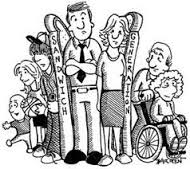
If you ask my wife, I am forever trying to catch up with her. When we walk the dog together, she’s booking down the road like a New Yorker trying to catch a cab while I mosey behind like a movie cowboy after a giant breakfast. Speaking of eating, my children constantly complain of how deliberate I consume dinner. I eat the way a worm might chew on a peanut butter sandwich.
Yet, when it came to starting a family, I was not alone in my slowness. While I was taking a circuitous career path through various writing and teaching gigs, my wife was also wending her way through graduate school. Neither of us was ready to have kids in such uncertainty, particularly because we were making only enough money to get by.
By the time our first child entered the world, Wendy and I were into our 30s, a decade older than our parents were when they began having kids. But we had jobs, just enough money to buy a small house, and a surrounding family populated by our son’s grandparents, several great-grandparents, aunts, uncles, and plenty of friends. We had love and support and a constantly growing wave of positivity that built as Wendy and I developed meaningful careers while we grew our family with only rare cloudy days to darken a bounty of sunshine. Life ambled at a pace that felt just right.
As I hit the late-40s of my charmed existence, the speed of existence revved up. My father came down with a virulent strain of cancer and was gone within five months. It happened so fast, I’m not sure I had enough time to draw a full breath. Now, I feel as if it was merely yesterday that he was with us. I still imagine life with him around to applaud his grandchildren’s accomplishments and just to talk about baseball on a Sunday.
Within a year of my father’s passing, my father-in-law’s health began to deteriorate due to Lewy body dementia and Parkinson’s disease. Sheldon was always a rock of a guy, a man of few words, but enduring support of his family. Worse for me has been watching my wife struggle to help him, her mom, and her sisters cope with the kind of extra care he needs to merely live out his days in ever-dimming light.
I write all of this to gain perspective on being in what is commonly called a “sandwich,” of being some kind of mystery meat between the slice of life that is raising children and the slice that is caring for aging parents. Sure, I saw a number of our friends scrambling to pick up kids from carpool and aid them with their college applications while helping parents stricken by everything from illness to financial woes. But that wasn’t supposed to happen in my family. We were meant to get our children through university, first jobs, and maybe even marriage before our parents started to fade. We had plans for our parents to coach us through a few more trials with the kids and regaling us with the wisdom of experience so that we could just enjoy the highlights of success.
Instead, we are dealing with pediatricians and geriatricians, nurturing our children’s wills while reading our parents’ wills, cheering at soccer games and hoping our remaining parents will still be able to recall our names.
Clearly, living in the sandwich is no picnic, but — it is vital to turn the sandwich into a feast of thanksgiving. We really have so much to be grateful for in that we have had parents in our lives who have loved us, taught us, and guided us so that we can bring up our own kids. We must be thankful that these parents have cherished and rejoiced in their grandchildren, and that these grandchildren have been lucky enough to be spoiled and schooled by their grandparents for every year they have had with them.
We must also appreciate that we still have a gaggle of grandmothers, and one great-grandmother, who are full of life despite the losses they have undergone or are undergoing. These women constantly remind us that the road provides plenty of detours yet strength and a focus on love keeps us all on a path of good surprises.
This Thanksgiving will be nothing like I would have imagined. It will not have all the people we would have wanted to be there and the conversation might be more about medical procedures than report cards. However, it will be a table around which sit vibrant living people and wondrous spirits who help us slow down to savor the time we have with each other.
© 2016 Gregory Keer. All rights reserved.
Words for My Father
By Gregory Keer
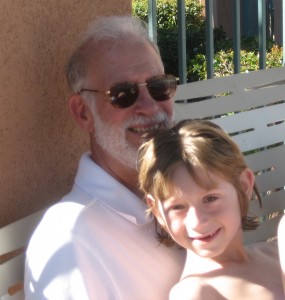 Today would have been my father’s 75th birthday. We had been planning to celebrate it for months and months prior to this date, July 12, 2014. Cancer had other plans, and it took him away from us on February 9 of this year, following a diagnosis less than four months earlier.
After my dad’s death, I took a hiatus from this Web site, partly in keeping with the advice he often gave me to try to slow down a bit more to gather in the details of life. But, on this day when it’s so very hard to be without him, I want to recognize the meaning he had for me in some fashion that feels right. Below is a version of the eulogy I gave at Dad’s funeral. It was surreal to be speaking about him in past tense when I said the words in front of the hundreds who came out to honor him that day. It still doesn’t feel quite real — and yet it is. Grieving is a long process, but remembering is forever, especially when it involves a man such as my father.
***
There are many reasons why I write. A number of them are because of my father. Dad, the man of science, was also a man of poetry. He wrote of moments and emotions in loving phrases to his luminous wife Franny and he etched in ink words of praise and vivid observation to all his children. He even wrote a children’s story about “Rollo,” a ball who learned to keep moving if he wanted to enjoy the world around him.
At times, I struggled to talk to my dad. There was the divorce, which took him away from daily opportunities to converse and he was needed by tens of thousands of patients over a 45-year career. Sometimes, I felt I couldn’t get enough of him. I certainly couldn’t get enough of him on the phone. My sister Kim can attest to my father’s dislike of the phone — often exhausted by work calls, Dad treated the receiver like it was one of Maxwell Smart’s shoe communicators that had come in contact with a pile of dog poop.
One of my motivations to write was to find ways to stop time, particularly in the hyperspace of adolescence, and tell my dad how much I loved him, how much I needed his words of validation. In my pre-teen and teen years, I wrote cards to him, with painstakingly chosen messages. It helped, especially since he wrote back cards to me, with sentences that never failed to reduce me to tears because they shone with such love and attention to the details of my concerns.
It was partly through my father’s writings that I was assured he was always thinking of me, crafting ways to guide me, even when he wasn’t talking out loud. They also showed me how much my dad preferred action over words. Dad was a doer, and the relationship we had over 47 years was less about chit chat or parental lecturing and more about playing basketball together, going to baseball games, and taking trips. So many trips to places like Chicago to see the grandparents, Philadelphia for father-son time, the Sierras for moments of hilarity with the Sussmans, Yosemite for one of many KJ adventures, Palm Desert with all the grandchildren, and Paris for a grown-up vacation with Franny – who, together with Dad, taught me so very much about love and partnership that I was able to find the most remarkable woman in Wendy. My God, there were so many vacations that he made happen so he could enjoy his loved ones without distractions.
Certainly, there were distractions, as there are in any life led in service to a community, that wedged between my dad and my efforts to get more words and attention from him. Often, when we were out at a supermarket together or a ballgame, he’d get approached by a patient who wanted to say hello to their favorite doctor. He was a bit of a celebrity, my dad, and I was known for 30-plus years as Dr. Keer’s son. It was a great coup for me one day when Dad called me up to tell me a student of mine came into the office and asked him, “Aren’t you Mr. Keer’s father?” Finally, I had turned the tables on him. And no one was prouder of it than Dad.
I wanted this speech to be funnier – Dad had such a great appreciation for humor — as he showed me through the tapes of Johnny Carson clips with legendary comedians, the afternoons of watching Mel Brooks movies, and his own goofiness and willingness to be poked fun at for his follicle-y challenged head, his bird-like legs, and his woefully underprivileged sense of rhythm.
But, I’m not feeling easily humored right now. I’m just beginning to miss him. I’m floating in the fog of all the subtle ways he enhanced my life through little gestures and a consistency of presence that I often took for granted. For a father of such carefully selected words and a son who never seems to shut up, we had one particular trip that was emblematic of our entire journey together. It was a weekend stay in San Francisco two years ago to see the Dodgers play the Giants, to eat great food since we both like that kind of thing, and to just — be — together. Not talking so much, just being.
He was really good at just being.
So, Dad, thank you for being with me. Thank you for being with all of us.
Great and Grand
By Gregory Keer
One of my favorite Bill Withers songs, aside from “Lean on Me,” is the sad and celebratory “Grandma’s Hands.” In it, Withers’ soulful and blue voice sings of his grandmother, who helped watch over him and supported him with her hands of experience.
Two years ago, I lost Grandma Betty, who died at the age of 92. She, too, had healing hands. One of my most treasured memories of her is the way she used to fill up with pride upon seeing me, then pull my face to hers with both hands and say, “Gregg, Gregg, Gregg.” I’m still not sure why I deserved all that validation and, frankly, I don’t think she would want me to think about it. It just was.
While I was blessed with 42 years of having her as a grandma, my own children had the good fortune of knowing her, too. My oldest son, Benjamin, has fond memories of visiting my grandparents in Chicago, eating Grandma Betty’s rice pudding, then having a snowball fight outside their apartment. And when my Grandpa Phil’s health necessitated that they move near us, all three of my boys got the chance to have their paternal great grandparents around.
Grandpa Phil, who came to this country as a little boy from Russia, reveled in the unbridled playfulness of his great grandsons. He was particularly tickled by my middle son’s name, Jacob, which was Grandpa Phil’s father’s name.
My dad’s parents have not been the only ones to favor my children with their love and wisdom. My maternal grandmother is now of an age she would prefer I not reveal, but she is alive, kicking, and a real presence in my sons’ world. Grandma Jenny regales my boys with her angelic lullabies and abundant spaghetti with meatballs. Despite a debilitating back condition, she even manages to play cars and trains with little Ari.
Grandma Jenny also likes to tell my sons stories about me, such as the time I stole salami from my parents when I was two and the evenings I would work on school projects with my beloved Grandpa Al, who died before my kids were born. The tales that used to embarrass me when I was a teenager now serve as glue for my relationship with Grandma Jenny. Occasionally, she calls to praise me for my own stories, the ones I write about my kids in these columns. She might be too easily impressed, but the stories remind her of the mutual good fortune that she is an active participant in my boys’ lives where most children are lucky to have any sort of grandparent.
The value of my sons sharing time with three great-grandparents is immeasurable. My kids see these elderly people as vital and relevant. They’ve played cards with them, eaten with them, hugged and kissed them. I hope and expect that they will always treat those much, much older than them with respect because they have had great grandparents.
Because of their relationships with them, my boys have also learned difficult but important lessons about death. When Grandpa Phil passed on five years ago, Benjamin and Jacob were sad but still foggy about the whole thing. They had many questions about bones in a cemetery and heaven, which my wife and I did our best to explain.
After Grandma Betty’s passing, following an awful illness that emotionally drained the whole family, Wendy and I decided to have the older boys, Benjamin (10) and Jacob (7), attend the funeral. It was hard for them, and they cried a lot, mostly because they saw their parents and grandparents weeping. But it was a good thing, I believe, for them to see that Grandma Betty’s caring hands still reach out to all of us.
With Grandma Jenny thankfully still with us to sing and tell stories, and the memories of Grandparents Betty and Phil forever strong, I am grateful to all of them for giving my children a sense of heritage and an appreciation for the vitality of old age.
Life is a Sandwich
By Gregory Keer
If you ask my wife, I am forever trying to catch up with her. When we walk the dog together, she’s booking down the road like a New Yorker trying to catch a cab while I mosey behind like a movie cowboy after a giant breakfast. Speaking of eating, my children constantly complain of how deliberate I consume dinner. I eat the way a worm might chew on a peanut butter sandwich.
Yet, when it came to starting a family, I was not alone in my slowness. While I was taking a circuitous career path through various writing and teaching gigs, my wife was also wending her way through graduate school. Neither of us was ready to have kids in such uncertainty, particularly because we were making only enough money to get by.
By the time our first child entered the world, Wendy and I were into our 30s, a decade older than our parents were when they began having kids. But we had jobs, just enough money to buy a small house, and a surrounding family populated by our son’s grandparents, several great-grandparents, aunts, uncles, and plenty of friends. We had love and support and a constantly growing wave of positivity that built as Wendy and I developed meaningful careers while we grew our family with only rare cloudy days to darken a bounty of sunshine. Life ambled at a pace that felt just right.
As I hit the late-40s of my charmed existence, the speed of existence revved up. My father came down with a virulent strain of cancer and was gone within five months. It happened so fast, I’m not sure I had enough time to draw a full breath. Now, I feel as if it was merely yesterday that he was with us. I still imagine life with him around to applaud his grandchildren’s accomplishments and just to talk about baseball on a Sunday.
Within a year of my father’s passing, my father-in-law’s health began to deteriorate due to Lewy body dementia and Parkinson’s disease. Sheldon was always a rock of a guy, a man of few words, but enduring support of his family. Worse for me has been watching my wife struggle to help him, her mom, and her sisters cope with the kind of extra care he needs to merely live out his days in ever-dimming light.
I write all of this to gain perspective on being in what is commonly called a “sandwich,” of being some kind of mystery meat between the slice of life that is raising children and the slice that is caring for aging parents. Sure, I saw a number of our friends scrambling to pick up kids from carpool and aid them with their college applications while helping parents stricken by everything from illness to financial woes. But that wasn’t supposed to happen in my family. We were meant to get our children through university, first jobs, and maybe even marriage before our parents started to fade. We had plans for our parents to coach us through a few more trials with the kids and regaling us with the wisdom of experience so that we could just enjoy the highlights of success.
Instead, we are dealing with pediatricians and geriatricians, nurturing our children’s wills while reading our parents’ wills, cheering at soccer games and hoping our remaining parents will still be able to recall our names.
Clearly, living in the sandwich is no picnic, but — it is vital to turn the sandwich into a feast of thanksgiving. We really have so much to be grateful for in that we have had parents in our lives who have loved us, taught us, and guided us so that we can bring up our own kids. We must be thankful that these parents have cherished and rejoiced in their grandchildren, and that these grandchildren have been lucky enough to be spoiled and schooled by their grandparents for every year they have had with them.
We must also appreciate that we still have a gaggle of grandmothers, and one great-grandmother, who are full of life despite the losses they have undergone or are undergoing. These women constantly remind us that the road provides plenty of detours yet strength and a focus on love keeps us all on a path of good surprises.
This Thanksgiving will be nothing like I would have imagined. It will not have all the people we would have wanted to be there and the conversation might be more about medical procedures than report cards. However, it will be a table around which sit vibrant living people and wondrous spirits who help us slow down to savor the time we have with each other.
© 2016 Gregory Keer. All rights reserved.
Words for My Father
By Gregory Keer
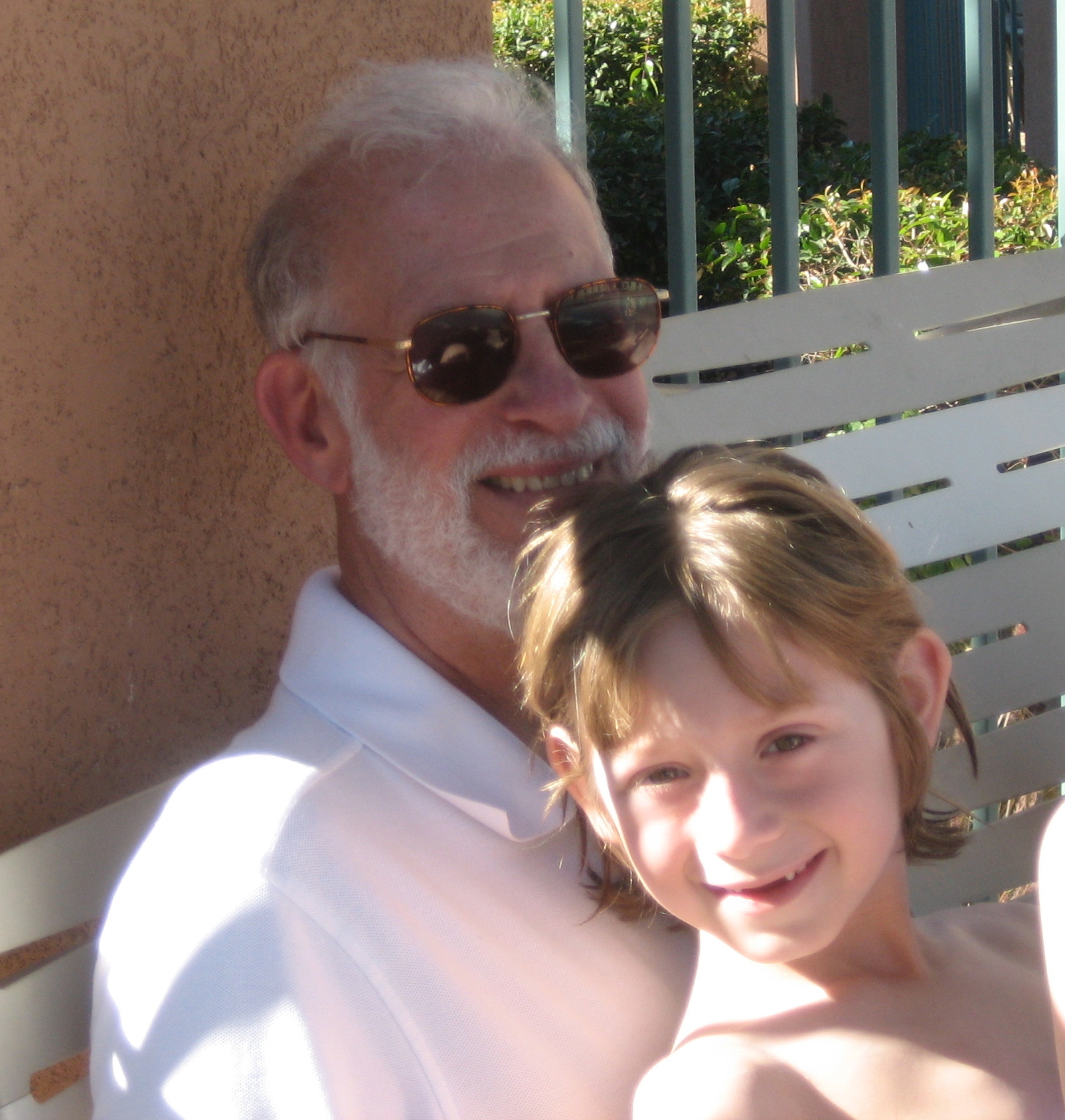 Today would have been my father’s 75th birthday. We had been planning to celebrate it for months and months prior to this date, July 12, 2014. Cancer had other plans, and it took him away from us on February 9 of this year, following a diagnosis less than four months earlier.
After my dad’s death, I took a hiatus from this Web site, partly in keeping with the advice he often gave me to try to slow down a bit more to gather in the details of life. But, on this day when it’s so very hard to be without him, I want to recognize the meaning he had for me in some fashion that feels right. Below is a version of the eulogy I gave at Dad’s funeral. It was surreal to be speaking about him in past tense when I said the words in front of the hundreds who came out to honor him that day. It still doesn’t feel quite real — and yet it is. Grieving is a long process, but remembering is forever, especially when it involves a man such as my father.
***
There are many reasons why I write. A number of them are because of my father. Dad, the man of science, was also a man of poetry. He wrote of moments and emotions in loving phrases to his luminous wife Franny and he etched in ink words of praise and vivid observation to all his children. He even wrote a children’s story about “Rollo,” a ball who learned to keep moving if he wanted to enjoy the world around him.
At times, I struggled to talk to my dad. There was the divorce, which took him away from daily opportunities to converse and he was needed by tens of thousands of patients over a 45-year career. Sometimes, I felt I couldn’t get enough of him. I certainly couldn’t get enough of him on the phone. My sister Kim can attest to my father’s dislike of the phone — often exhausted by work calls, Dad treated the receiver like it was one of Maxwell Smart’s shoe communicators that had come in contact with a pile of dog poop.
One of my motivations to write was to find ways to stop time, particularly in the hyperspace of adolescence, and tell my dad how much I loved him, how much I needed his words of validation. In my pre-teen and teen years, I wrote cards to him, with painstakingly chosen messages. It helped, especially since he wrote back cards to me, with sentences that never failed to reduce me to tears because they shone with such love and attention to the details of my concerns.
It was partly through my father’s writings that I was assured he was always thinking of me, crafting ways to guide me, even when he wasn’t talking out loud. They also showed me how much my dad preferred action over words. Dad was a doer, and the relationship we had over 47 years was less about chit chat or parental lecturing and more about playing basketball together, going to baseball games, and taking trips. So many trips to places like Chicago to see the grandparents, Philadelphia for father-son time, the Sierras for moments of hilarity with the Sussmans, Yosemite for one of many KJ adventures, Palm Desert with all the grandchildren, and Paris for a grown-up vacation with Franny – who, together with Dad, taught me so very much about love and partnership that I was able to find the most remarkable woman in Wendy. My God, there were so many vacations that he made happen so he could enjoy his loved ones without distractions.
Certainly, there were distractions, as there are in any life led in service to a community, that wedged between my dad and my efforts to get more words and attention from him. Often, when we were out at a supermarket together or a ballgame, he’d get approached by a patient who wanted to say hello to their favorite doctor. He was a bit of a celebrity, my dad, and I was known for 30-plus years as Dr. Keer’s son. It was a great coup for me one day when Dad called me up to tell me a student of mine came into the office and asked him, “Aren’t you Mr. Keer’s father?” Finally, I had turned the tables on him. And no one was prouder of it than Dad.
I wanted this speech to be funnier – Dad had such a great appreciation for humor — as he showed me through the tapes of Johnny Carson clips with legendary comedians, the afternoons of watching Mel Brooks movies, and his own goofiness and willingness to be poked fun at for his follicle-y challenged head, his bird-like legs, and his woefully underprivileged sense of rhythm.
But, I’m not feeling easily humored right now. I’m just beginning to miss him. I’m floating in the fog of all the subtle ways he enhanced my life through little gestures and a consistency of presence that I often took for granted. For a father of such carefully selected words and a son who never seems to shut up, we had one particular trip that was emblematic of our entire journey together. It was a weekend stay in San Francisco two years ago to see the Dodgers play the Giants, to eat great food since we both like that kind of thing, and to just — be — together. Not talking so much, just being.
He was really good at just being.
So, Dad, thank you for being with me. Thank you for being with all of us.
Great and Grand
By Gregory Keer
One of my favorite Bill Withers songs, aside from “Lean on Me,” is the sad and celebratory “Grandma’s Hands.” In it, Withers’ soulful and blue voice sings of his grandmother, who helped watch over him and supported him with her hands of experience.
Two years ago, I lost Grandma Betty, who died at the age of 92. She, too, had healing hands. One of my most treasured memories of her is the way she used to fill up with pride upon seeing me, then pull my face to hers with both hands and say, “Gregg, Gregg, Gregg.” I’m still not sure why I deserved all that validation and, frankly, I don’t think she would want me to think about it. It just was.
While I was blessed with 42 years of having her as a grandma, my own children had the good fortune of knowing her, too. My oldest son, Benjamin, has fond memories of visiting my grandparents in Chicago, eating Grandma Betty’s rice pudding, then having a snowball fight outside their apartment. And when my Grandpa Phil’s health necessitated that they move near us, all three of my boys got the chance to have their paternal great grandparents around.
Grandpa Phil, who came to this country as a little boy from Russia, reveled in the unbridled playfulness of his great grandsons. He was particularly tickled by my middle son’s name, Jacob, which was Grandpa Phil’s father’s name.
My dad’s parents have not been the only ones to favor my children with their love and wisdom. My maternal grandmother is now of an age she would prefer I not reveal, but she is alive, kicking, and a real presence in my sons’ world. Grandma Jenny regales my boys with her angelic lullabies and abundant spaghetti with meatballs. Despite a debilitating back condition, she even manages to play cars and trains with little Ari.
Grandma Jenny also likes to tell my sons stories about me, such as the time I stole salami from my parents when I was two and the evenings I would work on school projects with my beloved Grandpa Al, who died before my kids were born. The tales that used to embarrass me when I was a teenager now serve as glue for my relationship with Grandma Jenny. Occasionally, she calls to praise me for my own stories, the ones I write about my kids in these columns. She might be too easily impressed, but the stories remind her of the mutual good fortune that she is an active participant in my boys’ lives where most children are lucky to have any sort of grandparent.
The value of my sons sharing time with three great-grandparents is immeasurable. My kids see these elderly people as vital and relevant. They’ve played cards with them, eaten with them, hugged and kissed them. I hope and expect that they will always treat those much, much older than them with respect because they have had great grandparents.
Because of their relationships with them, my boys have also learned difficult but important lessons about death. When Grandpa Phil passed on five years ago, Benjamin and Jacob were sad but still foggy about the whole thing. They had many questions about bones in a cemetery and heaven, which my wife and I did our best to explain.
After Grandma Betty’s passing, following an awful illness that emotionally drained the whole family, Wendy and I decided to have the older boys, Benjamin (10) and Jacob (7), attend the funeral. It was hard for them, and they cried a lot, mostly because they saw their parents and grandparents weeping. But it was a good thing, I believe, for them to see that Grandma Betty’s caring hands still reach out to all of us.
With Grandma Jenny thankfully still with us to sing and tell stories, and the memories of Grandparents Betty and Phil forever strong, I am grateful to all of them for giving my children a sense of heritage and an appreciation for the vitality of old age.